

Hire Frontend Developers in India

Build interfaces that do more than look good. Hire frontend developers in India for SaaS products, web applications, customer portals, dashboards and business software where usability, performance and maintainable engineering matter.

Pavans Group provides frontend development expertise from Vadodara, Gujarat, India, working across modern JavaScript frameworks and broader product-development disciplines.

A production frontend sits between your users and everything happening behind the application.

User action → interface state → validation → API request → backend response → error or success state → updated experience

That means frontend engineering is not simply converting a design into code. It involves understanding components, application state, APIs, responsive behavior, browser constraints, accessibility, performance and the wider product workflow.

If the main engineering challenge exists in what users see, interact with and experience in the browser, dedicated frontend expertise may be the right starting point.

Tell us what you're building.

By submitting you agree to our Privacy Policy.

What does a frontend developer do?

A frontend developer builds the user-facing application layer-the part of your software that people see, navigate and interact with.

Depending on the product, frontend development may include:

A frontend developer needs to understand more than visual styling. The interface must correctly represent the application's business rules and communicate reliably with APIs, authentication systems and other backend services.

Application interfaces
SaaS dashboards
Customer and partner portals
Administrative panels
Forms and multi-step workflows
Interactive components
Responsive layouts
Application state
API integration
Authentication flows
Data visualization
Loading and error states
Browser compatibility
Frontend performance
Accessibility
Design-system implementation

Frontend development at a glance

Frontend responsibility Area
What users see and interact with Interface
Reusable building blocks across the product Components
What the application currently knows and displays State
How the interface receives and submits information APIs
Input, validation, feedback and submission Forms
How the product adapts across screen sizes Responsive behavior
Whether different users can operate the interface effectively Accessibility
How quickly the interface loads and responds Performance
What users see when something goes wrong Error handling

Need to improve an existing product interface?

Tell us where users are struggling, what technology already exists and which parts of the frontend need improvement.

Frontend product experience at Pavans Group

A framework list does not prove that a team can build a usable production application.

Pavans Group's portfolio includes software where dashboards, customer workflows, responsive web interfaces, forms, operational screens and API-driven user experiences are central to the product.

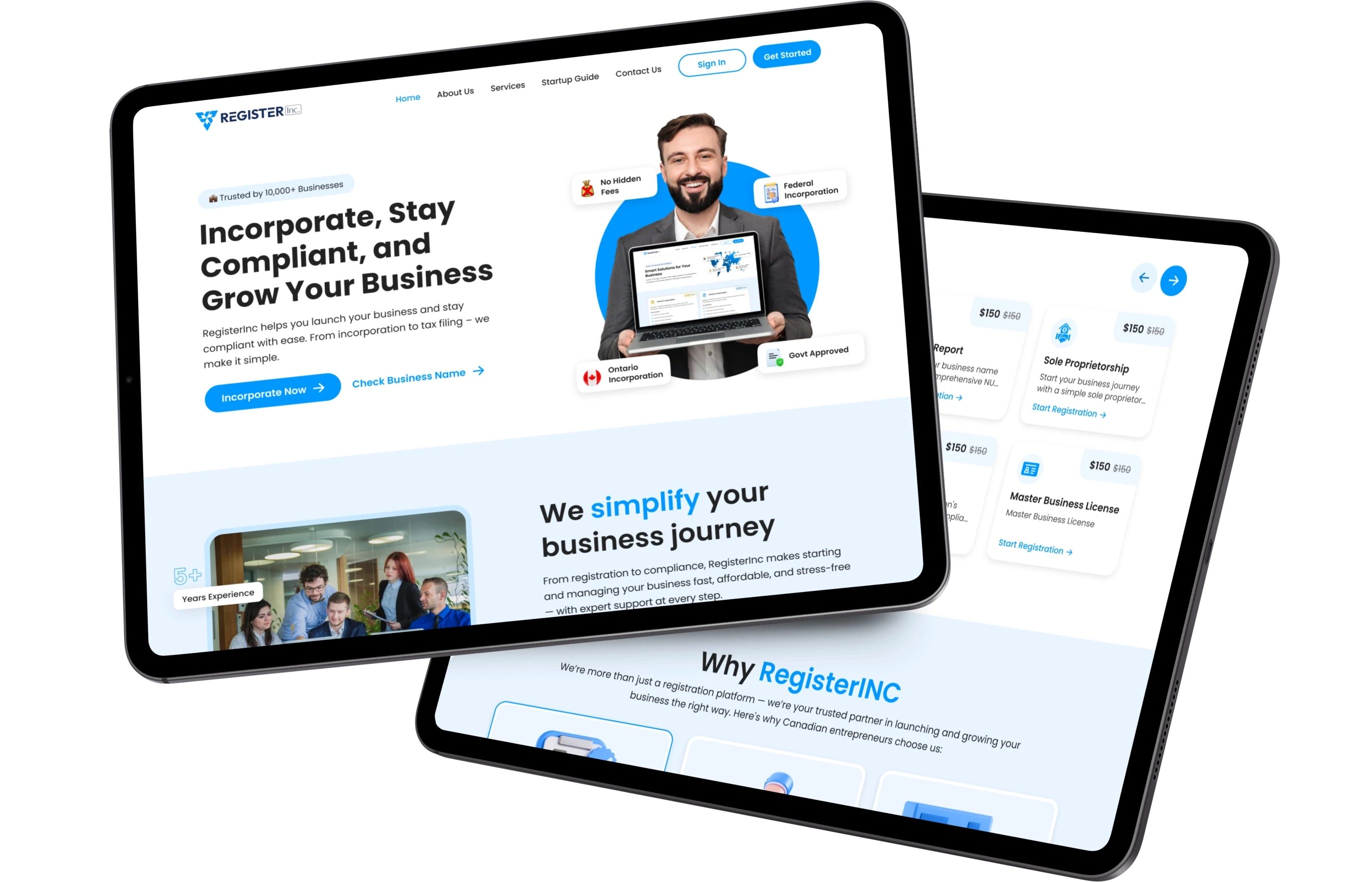
RegisterInc product screenshot

RegisterInc - responsive customer and administration interfaces

RegisterInc is a business-registration platform built around structured customer workflows, service-specific forms, document handling, payments and administration.

Pavans Group's published case study documents frontend development covering a responsive customer website, customer dashboard and desktop-friendly admin panel, alongside the wider backend and payment infrastructure.

Frontend challenges represented in the product

The interface needs to help users move through processes involving:

Service selectiondynamic forminformation entrydocument uploadpaymentorder status

This type of product requires more than attractive screens. Forms, validation, workflow state, navigation and backend responses all have to remain understandable throughout a multi-step process.

Explore the RegisterInc case study.

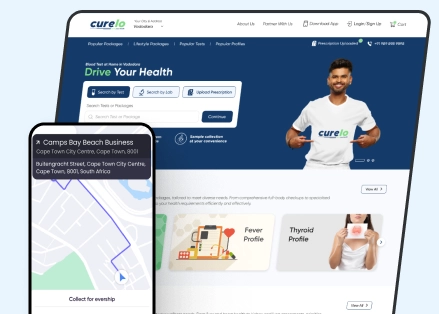
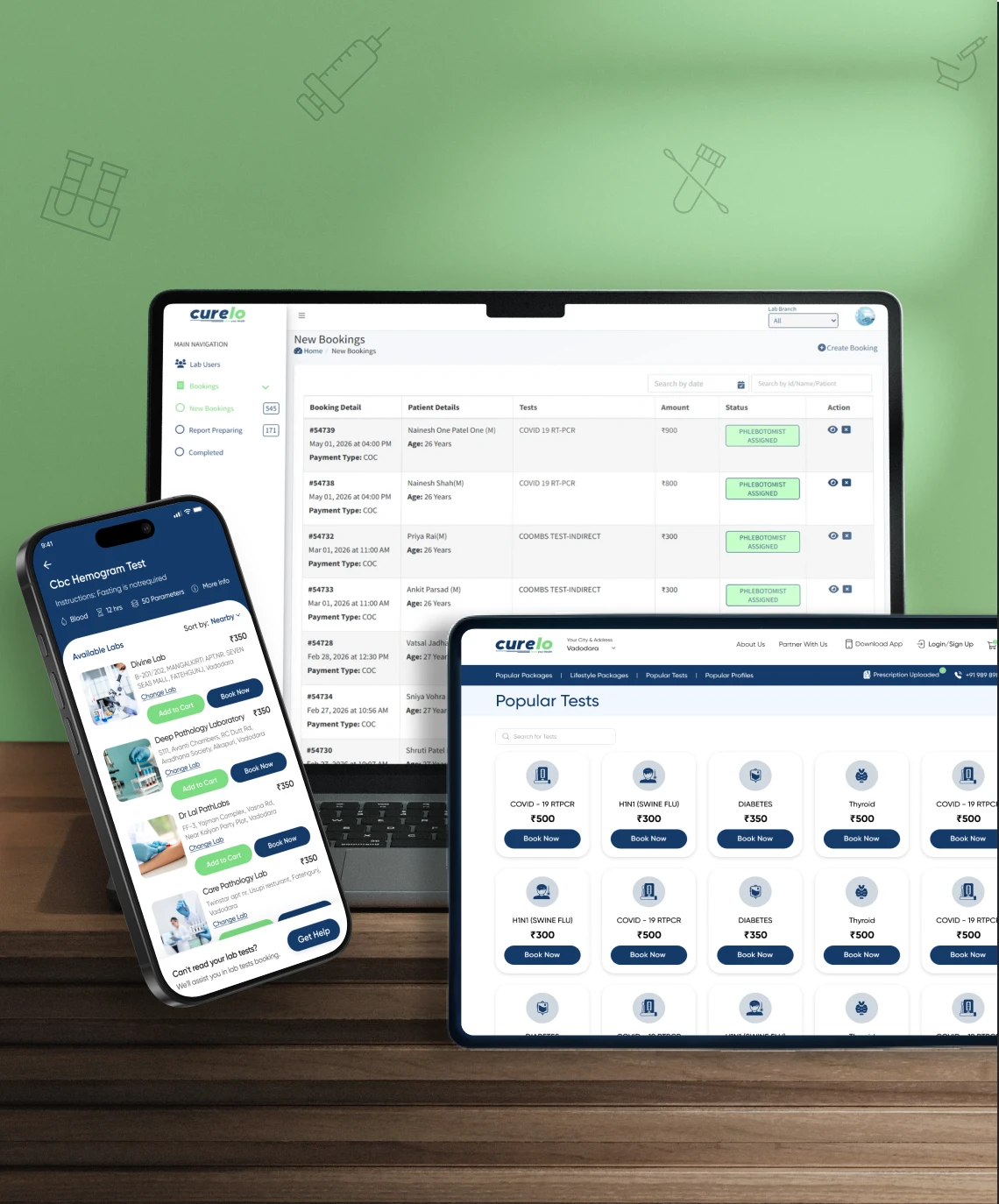
Curelo product screenshot

Curelo - healthcare booking across web and mobile

Curelo connects patients with diagnostic laboratories and phlebotomists through a digital booking ecosystem.

Pavans Group designed and developed a responsive web experience alongside mobile applications, lab workflows, booking functionality, payments and reports. The published case study describes multiple search modes, clear pricing, doorstep-collection scheduling, online payments and digital report access.

Why Curelo is relevant to frontend engineering

A healthcare booking interface has to turn significant application complexity into a flow that remains understandable for the user.

A patient might move through:

Searchcompareselect testchoose labschedule collectionpaytrack bookingaccess report

Each step depends on frontend state, backend information and clear feedback to the user.

The Curelo case study currently reports 1.5K+ labs, 5K+ diagnostic tests, 350K+ processed orders and presence across 12+ cities.

Explore the Curelo case study.

Curelo product screenshot

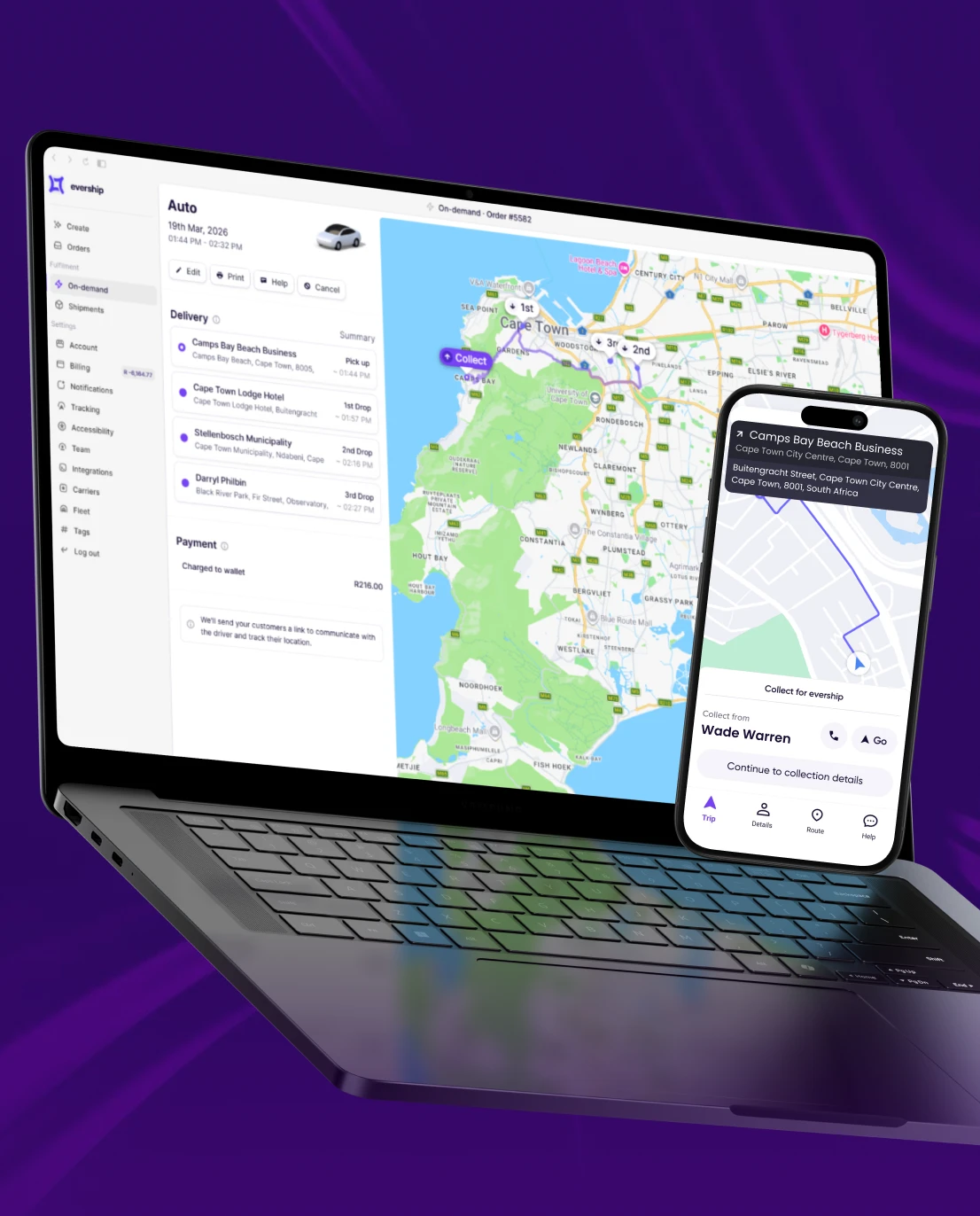
Evership - operational dashboard for shipping and fulfilment

Evership is a logistics and fulfilment platform combining merchant workflows, carrier integrations, driver management and real-time shipping information.

Pavans Group developed a centralized dashboard where merchants can synchronize orders, create shipments, compare shipping options, generate labels and monitor fulfilment workflows. The project also includes branded tracking experiences and operational interfaces supported by an API-first backend.

Why Evership matters for frontend development

Operational software needs to present significant amounts of changing information without overwhelming the user.

The interface has to turn:

Orderscarriersratesshipment statusdriverstracking events

into actions that a merchant can understand and complete efficiently.

Explore the Evership case study.

When should you hire a frontend developer?

Dedicated frontend expertise is particularly valuable when the main technical complexity sits inside the user-facing application.

A simple marketing website and a sophisticated SaaS application require very different frontend engineering.

Dedicated frontend expertise becomes more valuable when the product includes:

Complex dashboardsInteractive workflowsLarge formsRole-specific interfacesData tablesFilters and searchReal-time updatesVisualizationSignificant application stateReusable components

The more behavior the browser needs to manage, the more important frontend architecture becomes.

Sometimes the capability gap is very specific.

Your team may already have backend developers, APIs and infrastructure but need more capacity for:

Product interfacesReact, Angular or Vue developmentDashboard developmentDesign-system implementationResponsive behaviorAPI integrationFrontend modernization

In that situation, focused frontend expertise can make more sense than adding another full-stack role.

A Figma prototype does not become production software automatically.

Frontend developers have to convert the design into working components while accounting for:

Real application dataLong and short contentLoading statesError messagesPermissionsEmpty statesValidationDifferent screen sizesBrowser behaviorAPI responses

The finished product should preserve the intent of the design while remaining practical to develop and maintain.

Pavans Group also provides UI/UX design services, allowing design and frontend implementation to be considered as connected parts of the product.

Frontend applications can gradually become harder to change when:

Components are duplicatedApplication state is poorly organizedStyling is inconsistentAPI handling is scatteredDependencies are outdatedBusiness rules leak into multiple componentsChanges cause unexpected regressions

At that point, simply adding more features can increase technical debt.

Frontend modernization should first identify the structural problem before recommending a complete rewrite.

Frontend performance can affect how responsive and usable the product feels.

Potential causes can include:

Large JavaScript bundlesUnnecessary renderingInefficient data loadingHeavy images or mediaExcessive client-side workLarge third-party scriptsPoor loading strategiesRepeated API requests

Performance improvement should begin with evidence rather than automatically changing frameworks.

When is a frontend specialist more appropriate than a full-stack developer?

Both roles can contribute to the user-facing part of a product, but the right choice depends on where the complexity sits.

Situation Better starting point
Sophisticated browser-side application Frontend developer
Complex component architecture Frontend developer
UI performance is the primary problem Frontend developer
Product requires significant accessibility work Frontend specialist
Feature regularly crosses frontend and backend Full-stack developer
APIs and databases dominate the work Backend developer
APIs and integrations are the primary requirement API developer
Infrastructure is the main constraint DevOps/cloud engineer
Product needs several disciplines simultaneously Broader development team
  • Choose frontend expertise when depth in the interface matters

    Frontend specialists are particularly useful when responsibility centers on:

    Interface architecture Component Systems Application State Client-Side Performance Accessibility Design-system implementation Complex Browser Interactions Responsive behavior Frontend Testing API-Driven User Experiences

    A full-stack developer may be more appropriate when the same feature regularly requires substantial changes to both the user interface and server-side application.

Frontend development expertise at Pavans Group

Pavans Group's current technology ecosystem includes React.js, Next.js, TypeScript, Vue.js, Redux and Angular, alongside backend and cloud technologies used to support complete digital products. The framework should follow the product rather than the other way around.

  • React

    React development

    React can support interactive user interfaces built from reusable components.

    The important engineering decision is not simply whether React can build the interface. It is how components, state, data loading and product workflows should be structured so the application remains maintainable as it grows.

    SaaS applicationsDashboardsCustomer portalsAdministration systemsInteractive business applicationsAPI-driven products
  • Next.js

    Next.js development

    Next.js can be useful for React-based products that need capabilities extending beyond a purely client-rendered application.

    The appropriate architecture depends on the product's rendering, routing, data and application requirements rather than adopting Next.js simply because it is popular.

  • Angular development

    Angular can suit structured applications where teams benefit from a strongly organized frontend architecture.

    It can be relevant for business software, enterprise interfaces, dashboards and applications with substantial frontend functionality.

  • Vue.js

    Vue.js development

    Vue.js can support interactive applications requiring a component-based frontend with a comparatively flexible development model.

    As with any framework, maintainability depends more on architecture and engineering practices than the framework name alone.

  • JavaScript

    JavaScript and TypeScript

    JavaScript powers application behavior in modern browsers.

    TypeScript can add stronger type information to larger codebases, helping developers understand data structures, component contracts and application behavior more clearly as the project evolves.

    Framework expertise should be supported by strong JavaScript fundamentals rather than relying only on framework conventions.

What can frontend developers build?

Frontend developers can build the application layer through which users interact with your software.

SaaS dashboards

Build user-facing SaaS experiences involving accounts, dashboards, navigation, subscription information, settings, reports and application workflows.

The interface should make complex functionality feel understandable rather than exposing the complexity of the backend directly to the user.

Customer and partner portals

Build secure digital experiences where customers, vendors or partners can:

Sign inManage profilesView informationUpload documentsComplete formsTrack statusPerform transactionsAccess reportsInteract with business workflows

RegisterInc provides a live Pavans Group example of this type of customer-facing and administrative interface.

Business and enterprise applications

Internal applications can be highly complex even when they are not public-facing.

Frontend developers can build interfaces for:

OperationsReportingAdministrationWorkflow managementEmployee systemsData managementBusiness automationEnterprise portals

The user experience still matters because difficult internal software can slow down the people required to use it every day.

Data dashboards

Dashboards need more than charts.

A useful dashboard should help the user understand:

What happened? → What needs attention? → What can I do next?

Frontend work may involve filters, tables, charts, status indicators, search, drill-down interactions and API-driven data updates.

eCommerce interfaces

Frontend developers can contribute to customer journeys involving:

Product discoverySearchCategoriesProduct detailsShopping cartsCheckoutCustomer accountsOrder statusPromotionsStorefront integrations

Interface decisions can directly affect how easily customers understand and complete those journeys.

Responsive web applications

A responsive frontend should adapt the product's layout and interaction model-not merely shrink desktop screens.

Different devices may require different priorities around navigation, touch interaction, tables, forms, menus and information density.

Learn more about Pavans Group's broader web development capabilities.

Planning a new SaaS product, portal or web application?

Tell us what users need to accomplish and what technology already exists.

Good frontend engineering goes beyond pixel-perfect implementation

One of the most common frontend mistakes is treating development as the final stage of visual design. Production interfaces have to work with real users, real data and real system behavior.

  • Component architecture

    Reusable components can improve consistency and reduce duplicated development. But creating a component for everything can also make an application unnecessarily abstract. Good component boundaries should follow repeated behavior and genuine interface patterns.

  • Application state

    Interactive applications need a clear approach to information that changes while the user is working.

    Examples include:

    Logged-In User InformationFiltersForm DataNotificationsAPI resultsShopping CartsSelected recordsTemporary UI state

    Poor state management can make seemingly simple features unexpectedly difficult to maintain.

  • Accessibility

    Frontend engineering should account for users who navigate and interact with products in different ways. Depending on the application, this can involve semantic structure, keyboard operation, readable contrast, labels, focus behavior and other accessibility considerations.Pavans Group's current UI/UX design offering also describes accessible interface design as part of its broader product-design approach.

  • Loading, empty and error states

    A frontend is not complete when it works only during the perfect scenario.

    Developers should also consider

    What does the user see while information is loading?
    What happens when there is no data?
    What happens when an API fails?
    What happens when a form contains invalid information?

    These states are part of the product-not edge cases to be added at the end.

  • Responsive behavior

    Responsive development needs to account for:

    NavigationFormsTablesModalsCardsImagesTypographyTouch TargetsInformation hierarchy

    The objective is to preserve usability across devices rather than force every desktop element onto a smaller screen.

Frontend developers and API integration

Modern frontends rarely operate independently.

A user-facing application usually depends on backend APIs for information and actions.

For example:

User Submits Form → Frontend Validates → API Request → Backend Processes → Response → Frontend Updates The Interface
  • Frontend developers should understand API contracts

    Before implementation progresses too far, frontend and backend teams should align on:

    EndpointsRequest StructureResponse StructureAuthenticationPermissionsValidationFilteringError ResponsesPagination

    Clear contracts reduce rework and make it easier for both sides of the application to progress independently.

  • The frontend should not hide backend uncertainty

    Interfaces need defined behavior when:

    The API Is SlowThe Request FailsData Is IncompleteAccess Is DeniedInformation Changes Between Requests

    A polished UI that breaks whenever the backend behaves unexpectedly is not a production-ready frontend.

Frontend performance should be engineered, not assumed

A visually attractive application can still feel poor if interactions are slow or unstable. Frontend performance depends on several connected decisions.

JavaScript delivery

Large amounts of JavaScript can increase initial processing requirements.

Developers should consider whether all code is required immediately or whether some functionality can be loaded when needed.

Rendering behavior

Unnecessary rendering can make interfaces feel slower as applications and datasets grow.

Frontend architecture should help updates remain focused on the parts of the interface that actually changed.

Images and media

Large visual assets can become a major source of page weight.

Image dimensions, formats and loading behavior should reflect how the media is actually displayed.

Data loading

Users should not have to wait for information the current screen does not need.

Frontend and API design should work together to retrieve the right information at the right time.

Measure before changing architecture

Poor performance does not automatically mean the framework needs to be replaced.

The actual bottleneck might be:

JavaScript → Rendering → Image/Media → API → Backend → Database → Third-Party Script

Measure the problem before recommending the solution.

Frontend development for existing applications

Hiring frontend developers does not require rebuilding your product from the beginning. Existing applications may need focused improvements.

Develop new screens, components and workflows while preserving existing application behavior.

Modernization can involve:

Component restructuringFramework upgradesResponsive improvementsState-management changesDesign-system implementationAPI integration improvementsPerformance workAccessibility improvements

A codebase can become difficult to develop when repeated UI patterns are implemented differently across the application.

Refactoring can help consolidate genuine patterns without rewriting functionality that already works.

Some products need a significantly better user experience while the underlying backend still performs its job effectively.

Pavans Group's UI/UX material explicitly notes that interface and workflow redesign can be considered while retaining an existing backend, depending on the changes required.

The first recommendation should not automatically be:

“Rewrite the frontend.”

Developers should first understand:

current architecture → user problems → technical debt → business priorities → measurable constraints

Then decide what should be retained, refactored, upgraded or replaced.

Frontend development for new and growing products

The frontend priorities of an MVP are different from those of a mature SaaS application.

  • New product or MVP

    Early product development should focus on the core user journeys required to test the product.

    The goal is not to build a complete design system for every theoretical future feature.

    It is to create a maintainable foundation for the functionality the product genuinely needs now.

  • Mature application

    Established products may require frontend engineers to work within existing design systems, release processes, APIs and code standards.

    At this stage, understanding the existing application can be more important than choosing a new framework.

Growing digital product

As features and users increase, frontend priorities can shift toward:

Component ReuseDesign ConsistencyPerformanceTestingAccessibilityState ManagementDeveloper ExperienceApplication Architecture

The frontend should evolve as the product changes rather than remain permanently structured around the assumptions of the first release.

How Pavans Group approaches frontend development

Frontend engineering works best when product, design, frontend and backend decisions are connected.

Before implementation begins, understand:

Who uses the applicationWhat they need to accomplishWhich workflows matterWhich screens already existWhat technical constraints are presentWhich APIs and integrations support the interface

For an existing application, assess the current framework, components, state, APIs, design patterns, responsive behavior and known frontend problems.

For a new application, align the design and architecture before development spreads across multiple screens.

Identify:

Reusable componentsPage-level responsibilitiesShared layoutsForm patternsData requirementsApplication stateAPI interactions

The objective is useful reuse-not abstraction for its own sake.

Frontend features should be implemented in increments that can be reviewed against real product workflows.

Pavans Group's broader development approach follows an iterative process covering discovery, design, development, testing and deployment.

Testing should consider more than whether the page renders.

Depending on the product, review:

User workflowsFormsAPI responsesError statesResponsive behaviorBrowser behaviorPermissionsRegression riskPerformance

Production usage may reveal interaction problems, performance bottlenecks or edge cases that were not obvious during development.

Frontend improvement should continue from actual product evidence.

Working with your UI/UX, backend or internal engineering team

Frontend developers rarely work effectively in isolation.

  • Working with UI/UX designers

    Design and frontend teams should align on:

    ComponentsStatesResponsive BehaviorFormsErrorsContent VariationsEmpty StatesInteraction Patterns

    A design should communicate intended behavior-not only static screen appearance.

    Pavans Group provides both UI/UX design and web development allowing these disciplines to be coordinated when a product requires both.

  • Working inside an existing engineering team

    External frontend contributors should follow the application's existing standards where those standards remain appropriate.

    That can include:

    Repository WorkflowCode ReviewComponent ConventionsIssue trackingTestingDocumentationRelease Processes

    The goal is one product codebase and one engineering workflow not a separate external-development island.

  • Working with backend developers

    Frontend developers need reliable API contracts and a shared understanding of validation, authentication, permissions and error behavior.

    Neither side should need to reverse-engineer the other's assumptions late in development.

Frontend development across different industries

The framework may be the same while the interface problem changes completely. A React application used for healthcare has different workflows from a React application used for logistics or business registration.

What should you look for when hiring frontend developers?

Framework familiarity is only the beginning. A developer can know React syntax and still struggle to structure a large production interface.

  • 01

    Strong JavaScript fundamentals

    Frameworks change

    Developers should understand the underlying browser and JavaScript concepts that determine how the application behaves.

  • 02

    API integration

    Frontend developers should be comfortable working with request/response structures, authentication, loading states, validation and error handling.

  • 03

    Component architecture

    Ask how the developer decides:

    What should become reusable?
    Where should component responsibility stop?
    When is abstraction helping-and when is it making the code harder to understand?
  • 04

    Responsive implementation

    Review whether the developer understands how interactions-not merely dimensions-change on smaller screens.

  • 05

    Accessibility awareness

    Interfaces should remain operable for users with different needs and input methods.

    Accessibility should be considered during component implementation rather than treated solely as a final audit.

  • 06

    Performance diagnosis

    Ask how the developer would investigate a slow application.

    A strong answer should begin with measurement and evidence rather than immediately recommending another framework.

  • 07

    Application state

    Ask how they decide what belongs in:

    Local Component StateShared Application StateURL StateServer-Derived Data

    Putting everything into one global state store is not automatically good architecture.

  • 08

    Product understanding

    Frontend decisions affect how people experience the entire product.

    Developers should understand the user goal behind a feature rather than implementing requirements as isolated tickets.

Frontend developer vs UI/UX designer vs full-stack developer

These roles collaborate closely but solve different problems.

Role Primary responsibility
Frontend developer Turns product interfaces and interactions into production software
UI designer Defines visual interface design and presentation
UX designer Improves workflows, usability and product experience
Full-stack developer Works across frontend and backend application layers
Backend developer Builds APIs, application logic, databases and server-side systems
  • Frontend developer vs UI/UX designer

    A UI/UX designer defines how the product should communicate and behave for users.

    The frontend developer turns that design into a functioning application connected to real data, APIs and application logic.

    Many strong digital products need both disciplines working together.

    Learn more about Pavans Group's UI/UX design capabilities

  • Frontend developer vs full-stack developer

    Choose deeper frontend expertise when most of the challenge is concentrated in the interface, component architecture, responsive behavior, performance or browser-side application logic.

    Full-stack capability becomes more useful when the same feature repeatedly requires substantial frontend and backend changes.

Frontend developer vs web developer

“Web developer” is a broader term that may include frontend, backend or full-stack responsibilities.

Frontend development specifically focuses on the browser-facing application layer.

For broader end-to-end web projects, explore Pavans Group's web development services.

Frontend quality, maintainability and testing

A frontend should remain understandable after the original feature has shipped.

  • Consistent components

    Common interface patterns should behave consistently across the application.

  • Clear code responsibility

    Components should have understandable purposes instead of accumulating unrelated logic over time.

  • Error handling

    Failures should produce useful application behavior rather than blank screens or unexplained states.

  • Testing based on product risk

    The appropriate testing strategy depends on the application.

    High-value workflows such as authentication, checkout, booking or critical business operations deserve stronger validation than purely decorative interface elements.

  • Documentation where it matters

    Important setup requirements, shared components, design conventions and unusual architectural decisions should be understandable to developers who join the project later.

    Maintainability is a team property, not simply a matter of code formatting.

Hire frontend developers in India from Vadodara, Gujarat

Pavans Group was established in 2011 and is headquartered in Vadodara, Gujarat, India. Its public company information describes software and digital-product work for clients in India and international markets.

For businesses evaluating frontend developers in India, location is only one part of the decision.

Also evaluate:

Relevant Frontend Experience Product Understanding Framework Fundamentals API Integration Capability UI/UX Collaboration Performance Thinking Maintainability Communication Development visibility

Frontend development for businesses in Vadodara and Gujarat.

Pavans Group's Vadodara presence provides genuine local relevance for businesses looking for a technology partner in Gujarat.

Explore our broader software development capabilities in Vadodara.

Frontend development for international products.

For companies outside India, successful collaboration depends on more than where developers are located.

Clear expectations should exist around:

Requirements → Technical Ownership → Communication → Code Review → APIs → QA → Releases

Pavans Group's public portfolio includes digital products serving international markets, including logistics, business-registration and other software platforms.

How much does it cost to hire frontend developers in India?

There is no useful universal frontend development rate for every requirement.
The cost depends on what the developer needs to own and how complex the application is.

What affects frontend developer cost?

  • Application complexity

    A simple customer portal and a sophisticated SaaS application require different levels of engineering responsibility.

  • Framework and existing architecture

    Joining an established React, Angular, Vue or Next.js product may require time to understand existing components, dependencies and application patterns.

  • Interface complexity

    Complex forms, visualization, real-time functionality, data-heavy dashboards and advanced interactions can require deeper frontend expertise.

  • Design-system requirements

    Creating or implementing a reusable component system can increase initial work while improving consistency across a larger product.

  • Performance requirements

    Performance investigation and optimization require additional engineering when the interface has measurable speed or responsiveness problems.

  • Existing technical debt

    An older application may require refactoring before significant new functionality can be added safely.

  • Supporting expertise

    UI/UX, backend, QA, DevOps or architecture requirements can affect the overall development structure.

Compare responsibility before comparing rates

What does the frontend developer need to own?

Pavans Group's public company information lists fixed-price, dedicated-team and hourly engagement models at the company level; the appropriate commercial structure should be matched to the actual scope and responsibility.

Then determine:

product requirement → frontend responsibility → required expertise → working structure → cost

Need a requirement-based estimate?

Tell us what you're building, which frontend technology already exists and what responsibility you need covered.

Why consider Pavans Group for frontend development?

Frontend expertise within a broader product-engineering team

Pavans Group's current technology ecosystem includes React.js, Next.js, TypeScript, Vue.js, Redux and Angular, alongside backend, mobile, cloud, AI and other technologies used across digital products.

That makes it possible to consider the frontend in the context of the wider application rather than as an isolated set of screens.

Design and development can work together

Pavans Group provides both UI/UX design and web development, helping reduce the gap between intended product behavior and production implementation.

Real interface-heavy product experience

RegisterInc demonstrates responsive customer, dashboard and administration interfaces.

Curelo demonstrates healthcare booking across responsive web and mobile experiences.

Evership demonstrates operational dashboards, shipping workflows and branded customer tracking.

Experience with new and existing software

Pavans Group's broader software-development proposition covers new product development, existing application enhancement and modernization rather than limiting development to greenfield projects.

India-based development capability

Pavans Group is headquartered in Vadodara, Gujarat and works with businesses in India and international markets.

Frequently asked questions about hiring frontend developers

A frontend developer builds the part of a web application that users see and interact with. Responsibilities can include components, layouts, forms, application state, API integration, responsive behavior, accessibility, browser compatibility and frontend performance.

Pavans Group's current published technology ecosystem includes React.js, Next.js, TypeScript, Vue.js, Redux and Angular.

Choose dedicated frontend expertise when most of the complexity exists in the user interface, browser-side architecture, component system, application state, accessibility or frontend performance.

A full-stack developer may be more appropriate when the same features regularly require significant work across both frontend and backend layers.

Yes. Frontend developers commonly work with existing APIs and backend services.

The team should first understand API contracts, authentication, permissions, validation and error behavior so frontend changes remain compatible with the existing system.

Yes.

Existing frontend work can include new features, interface improvements, responsive fixes, framework upgrades, component refactoring, design-system implementation, API integration and performance improvements.

The current codebase should be understood before recommending a major rewrite.

Pavans Group provides both UI/UX design and web development. This allows product design and frontend implementation to be considered together when both capabilities are required.

Yes. Frontend engineers can build dashboards involving navigation, user accounts, data views, forms, filtering, settings and API-driven functionality.

The exact architecture depends on the complexity of the application and the backend services supporting it.

Yes. API integration is a common frontend responsibility.

Frontend developers need to understand request and response structures, authentication, loading states, validation and error behavior so the application responds appropriately to backend conditions.

Yes, when the performance problem originates in the frontend.

Potential areas include JavaScript delivery, rendering, data loading, media, third-party scripts and inefficient application behavior.

Performance should be measured before deciding what needs to change.

The roles overlap but are different.

UI/UX designers focus primarily on user workflows, interaction design and visual experience. Frontend developers turn those designs into working software.

Some projects benefit from both disciplines working closely together.

Yes. Responsive frontend development adapts layouts and interactions across desktop, tablet and mobile screen sizes.

A good responsive implementation considers navigation, forms, data tables, content priorities and touch interactions rather than simply scaling down desktop layouts.

Yes. Modernization can involve framework upgrades, component restructuring, design-system adoption, responsive improvements, performance optimization and gradual replacement of legacy frontend code.

A full rewrite should not be assumed to be necessary until the existing application has been assessed.

Cost depends on application complexity, required experience, framework, interface complexity, existing code quality, performance requirements, design-system needs and supporting engineering responsibilities.

A requirement-based estimate is more useful than choosing a developer based only on a generic market rate.

Yes. Pavans Group is headquartered in Vadodara, Gujarat, India and was established in 2011.

Pavans Group's public website describes software and digital-product work with businesses across India and international markets. The specific engagement structure, responsibilities and collaboration requirements should be agreed according to the project.

Useful information includes:

What you are buildingExisting application URL or screenshotsCurrent frontend frameworkDesign files, if availableBackend/API informationFeatures or backlogKnown usability or performance problemsExisting engineering teamProduct prioritiesExpected scope

You do not need perfect technical documentation simply to begin the conversation.

Build a frontend users can understand and your team can maintain

A strong frontend sits at the intersection of product design and software engineering.

It should help users complete their goals without exposing unnecessary technical complexity, while giving the engineering team a codebase that can continue evolving as the product grows.

Whether you are building a new SaaS application, extending an existing portal, modernizing an older interface or adding frontend capacity to your development team, start with the user workflow and the engineering responsibility.

Pavans Group can help you evaluate the frontend requirement in the context of the complete product.

Discuss your frontend development requirements

Tell us what you're building, what exists today and where the frontend challenge lies.