Logistics and transportation
Logistics APIs may connect:
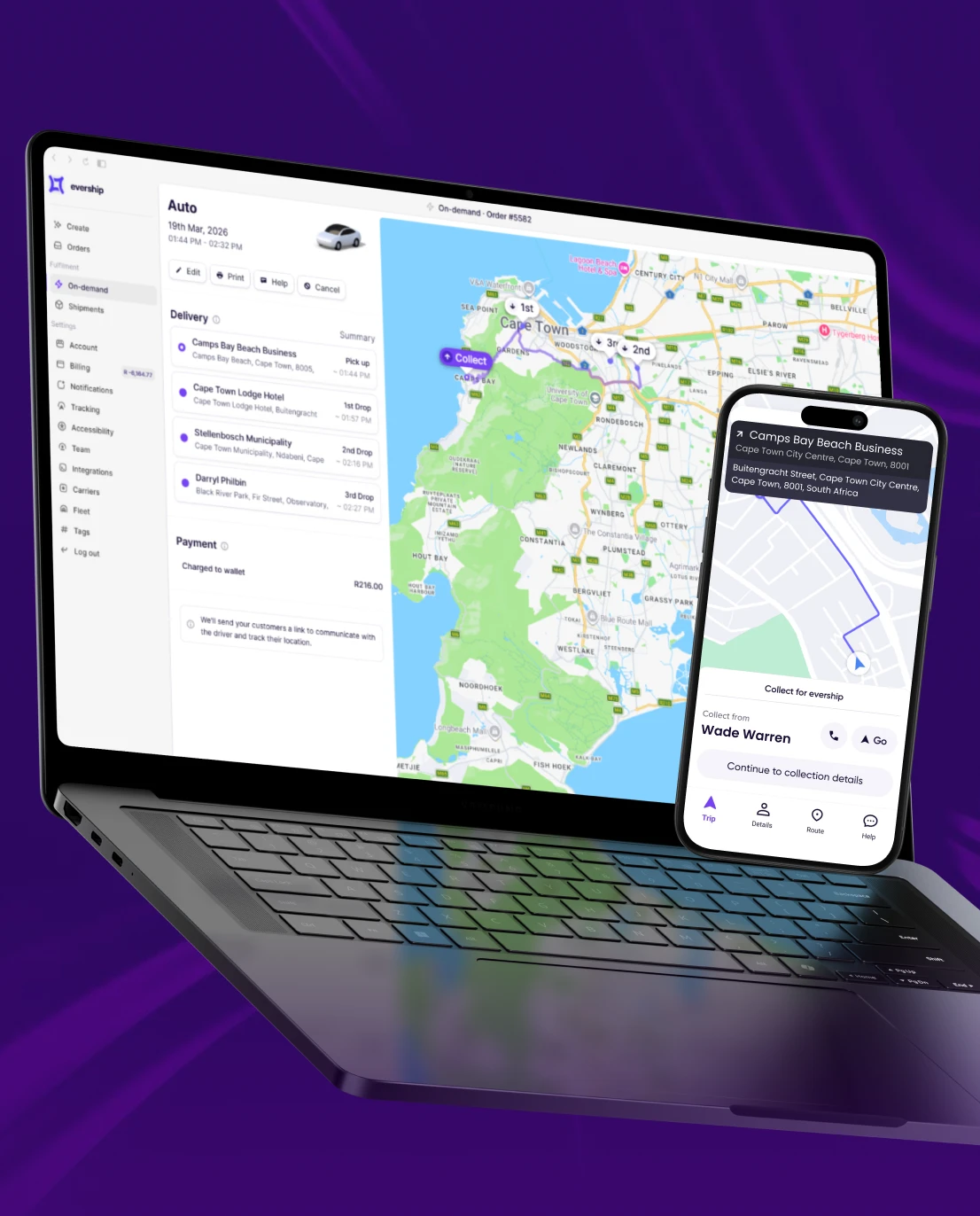
Evership provides direct Pavans Group evidence of API-first logistics infrastructure using carrier integrations and real-time webhooks.
An API developer designs, builds, integrates and maintains the interfaces that allow software systems to communicate with each other.
Depending on the application, API development can include:
The API layer sits between systems that may be developed by different teams, run on different technologies and change at different speeds.
That is why API development should focus not only on “Can these systems connect?” but also:
Can they continue communicating reliably when data changes, requests fail, systems are updated or the same event is received more than once?
| Core responsibility | Area |
|---|---|
| Defines requests, responses and expected behavior | API contract |
| Verifies who or what is calling the API | Authentication |
| Controls what the caller can access or change | Authorization |
| Protects the system from invalid requests | Validation |
| Connects external and internal platforms | Integrations |
| Delivers event-driven updates between systems | Webhooks |
| Helps APIs evolve without unnecessarily breaking consumers | Versioning |
| Handles failures, retries and duplicate events | Reliability |
| Helps other developers understand and use the API | Documentation |
| Helps teams investigate errors and integration problems | Observability |
Tell us which applications are involved, what information needs to move between them and which system should remain the source of truth.
API capability is easier to evaluate through real products than through a list of frameworks.
Pavans Group's portfolio includes logistics, healthcare, business-registration and operational systems where APIs connect applications, external providers and business workflows.
Tell us which systems need to communicate and what business process depends on the connection.
Dedicated API expertise becomes especially useful when system-to-system communication is itself a major part of the product.
The roles overlap, but they solve different primary problems.
| Requirement | Better starting point |
|---|---|
| External system integrations dominate the project | API developer |
| Public or partner API is the product | API developer |
| Webhooks and data synchronization are central | API developer |
| Backend business logic and database architecture dominate | Backend developer |
| Feature work spans frontend and backend | Full-stack developer |
| User-interface complexity is the main issue | Frontend developer |
| Infrastructure and deployment are the primary concern | DevOps/cloud specialist |
| Major system restructuring is required | Architecture expertise |
API development is part of backend engineering, but backend responsibility is broader.
A backend developer may own:
An API specialist becomes particularly relevant when the difficult part of the requirement is the contract between systems.
A full-stack developer can build APIs as part of an end-to-end feature.
Choose focused API expertise when the primary challenge involves:
GraphQL can be appropriate where client applications benefit from requesting precisely structured data through a flexible query model.
Pavans Group's current web-development offering lists GraphQL alongside REST as part of its API capabilities.
GraphQL may be relevant when:
Flexibility does not remove the need to consider:
REST and GraphQL are tools, not rankings.
The correct choice depends on the application and its consumers.
REST remains a common approach for connecting applications and services through HTTP-based interfaces, making it suitable for web applications, mobile apps, partner integrations, SaaS products, internal services and external systems that need a structured and reliable way to exchange data and functionality.
A useful API should make it clear:
Predictability reduces the amount of integration-specific knowledge every consumer needs to carry.
A consumer needs to distinguish between situations such as:
Error responses should help the calling application decide what to do next.
Large collections should not automatically return every available record.
Depending on the API, developers may need to define:
Those choices affect performance as data grows.
Third-party integrations connect your software with systems your team does not own.
That changes the engineering problem.
Payment integrations may involve:
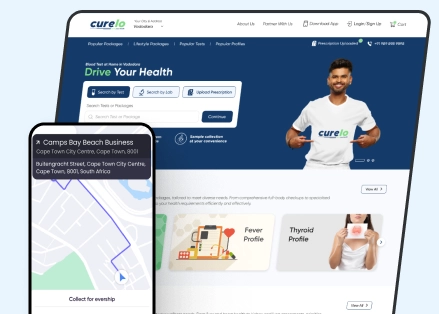
Curelo's published implementation includes Razorpay integration, while RegisterInc documents Stripe integration.
Shipping integrations can require:
Evership demonstrates this type of carrier and webhook integration at product level.
Connecting operational software with CRM or ERP systems may help synchronize:
Pavans Group's current software-development material includes CRM, ERP, Tally, Zoho and related integration capabilities.
An eCommerce ecosystem may connect:
Each system may have different data models and update rules.

The integration architecture should define how information moves and which platform owns each record.
A webhook allows one system to automatically notify another when a specific event occurs, removing the need for the receiving application to continuously check for updates. Webhooks are commonly used for events such as payment completion, shipment creation, delivery-status changes, subscription cancellations, order updates, and document processing, enabling connected systems to respond quickly when important changes happen.
In a real-world example, Evership uses real-time webhooks for shipment, label, and tracking events, helping information move between the shipping platform, carriers, merchants, and related workflows as events occur. This event-driven approach supports faster synchronization and reduces unnecessary repeated API requests.
A provider may send the same event more than once.
If the receiving system treats every delivery as a brand-new action, that can cause:
Webhook processing should therefore consider whether operations need to be idempotent-meaning that receiving the same event repeatedly does not produce an incorrect repeated outcome.
Event-driven systems should not assume every event reaches the application in the perfect sequence.
The API design may need to determine whether:
These details are often more important than creating the webhook endpoint itself.
Most integrations are easy to demonstrate when every service is working correctly.
Production systems need to handle the opposite case.
An external system can take too long to respond.
The application needs to decide whether to:
Retries can improve reliability, but uncontrolled retries can make a failure worse.
Developers should consider:
A workflow can succeed in one system and fail in another.
For example:
The API architecture needs a recovery or reconciliation strategy rather than leaving two platforms in conflicting states indefinitely.
Third-party services will occasionally become unavailable.
Your product needs to decide what users and internal teams should experience when that happens.
The answer may involve:
An API should not only know how to process a request.
It also needs to know whether that request should be allowed.
Depending on the product, the caller may be:
An authenticated caller should not automatically have access to every action or record.
Permissions may depend on:
Keys, tokens and integration credentials need appropriate storage, rotation and access controls.
They should not be exposed casually in client-side applications, repositories or logs.
Several applications may depend on one contract:
Changing that API without understanding its consumers can create failures far beyond the backend service itself.
Some changes can remain backward-compatible.
For example, adding an optional response field may be safer than changing the meaning or type of an existing field.
Changes to:
may require consumers to update.
Before introducing a breaking change, identify:
An undocumented API can technically function, but it often becomes difficult and expensive for developers to integrate and maintain. Clear API documentation should explain authentication, available endpoints, required parameters, request examples, response structures, error responses, pagination, rate restrictions, webhook events, and version behavior so developers can understand how to use the API correctly without relying on trial and error or repeated support.
Without clear documentation, every consuming team may need to ask:
Clear contracts reduce dependence on undocumented knowledge.
A 200 OK response confirms only one successful scenario; robust API testing also needs to validate how the system behaves with invalid data, missing fields, authentication failures, permission failures, duplicate requests, rate restrictions, external-service errors, timeouts, database failures, and unexpected response values.
Testing should also cover asynchronous and event-driven behavior such as webhook retries, because integrations often fail outside the ideal request-response flow. The goal is to confirm that the API handles both successful and failure scenarios predictably without creating incorrect data, duplicate actions, or broken workflows.
Where several teams depend on an API, validating request and response expectations can help identify breaking changes earlier.
The API may work perfectly in isolation while the overall business workflow still fails.
Integration testing should validate important flows across the systems involved.
Pavans Group's broader development process includes API, integration, performance and security testing as part of software delivery.
API performance should be measured across the entire request path.
A slow endpoint can originate from:
Inefficient queries or missing indexes can make an otherwise simple endpoint slow.
Your endpoint may be waiting on another provider.
In that case, optimizing application code alone may not solve the delay.
Returning far more information than a consumer needs can increase network and processing costs.
Caching may reduce repeated work for information that does not need to be regenerated on every request.
Long-running tasks may be better moved out of the immediate request/response cycle where the product allows it.
The first step should be measurement.
Do not redesign the API architecture before identifying the actual bottleneck.
Mobile applications often rely on backend APIs to deliver core functionality and keep data consistent across the product. APIs can support authentication, user profiles, application data, payments, notifications, media, search, location-based workflows, synchronization, and business logic behind the mobile experience.
Pavans Group’s current mobile-development offering includes backend and API development for mobile applications, helping connect the app interface with databases, business logic, third-party services, and other systems required to support the complete mobile product.
A mobile application may experience:
The client and API should agree on how important workflows behave under those conditions.
PCA and Molo are Pavans Group examples of products designed for field environments where connectivity can become an operational constraint.
You do not always need to replace older software to make it useful to new applications.
An API layer can sometimes expose selected functionality while the underlying system remains in place.
An established application may contain years of important functionality.
Creating an API around selected capabilities can allow:
without attempting to replace everything immediately.
API modernization may include:
An old endpoint may look unused from inside the backend repository while still supporting:
Map API consumers before removing or changing existing behavior.
Pavans Group currently publishes fixed-price, dedicated-team and hourly engagement models at company level.
A fixed-price structure can be appropriate when:
A dedicated-team model can suit longer-term products where API development evolves alongside:
Hourly work can be useful when:
The appropriate model should follow the certainty and duration of the requirement.
API development should begin with the systems and workflows-not with endpoint names.
The technical principles of API development remain similar, but the workflows and consequences of failure differ by industry.
Logistics APIs may connect:
Evership provides direct Pavans Group evidence of API-first logistics infrastructure using carrier integrations and real-time webhooks.
Healthcare APIs can connect patient applications, laboratories, administrative portals, payment systems and operational workflows.
Curelo's published implementation includes API development within its multi-sided healthcare ecosystem.
API integrations can connect:
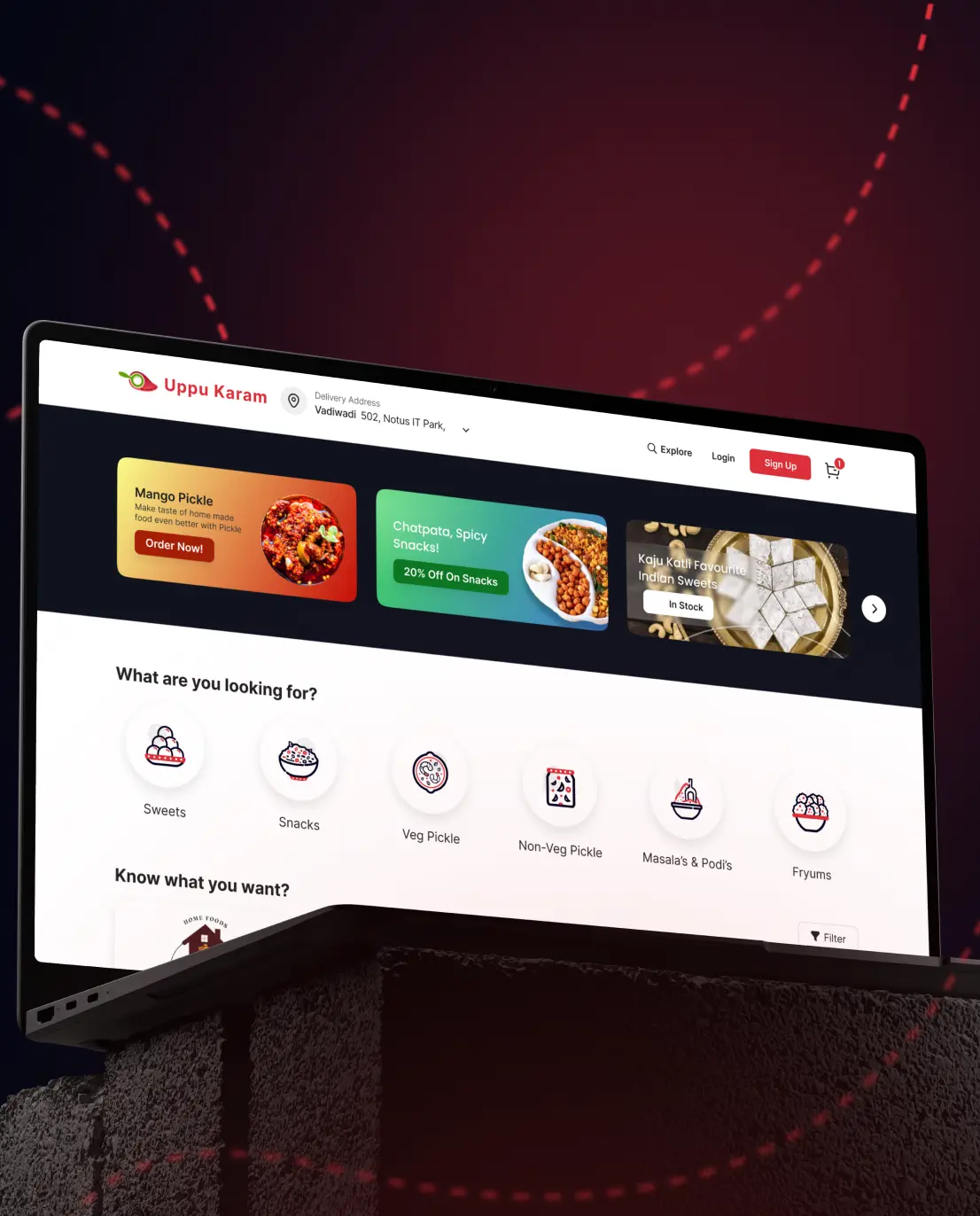
Uppu Karam provides Pavans Group evidence of API development inside a multi-sided marketplace application.
A developer who can make one API call is not necessarily ready to design a reliable integration layer.
Ask how the developer defines:
Good API design begins with how consumers will actually use the interface.
The developer should understand how access is granted and how permissions should be limited to the correct users, applications or services.
When several systems hold related information, the developer should be able to reason about:
An API that only its original developer understands creates long-term operational risk.
Ask how the developer would introduce a change without immediately breaking existing mobile, web or partner consumers.
Integration problems can happen across systems owned by different organizations.
Useful logs and diagnostic information can substantially reduce the time required to understand where a failure occurred.
Ask:
These questions reveal whether the developer is thinking beyond the happy path.
There is no single useful API developer rate for every project.
Cost depends heavily on what the API developer needs to own.
Integrating two applications is different from coordinating a network of platforms, mobile apps and partner systems.
Simple CRUD endpoints require different engineering from APIs involving complicated business rules, transactions, permissions or event-driven workflows.
Every external provider introduces its own:
Public, partner or sensitive-data APIs may require stronger authentication, authorization, logging and review.
Two-way synchronization, offline workflows and conflict handling can significantly increase complexity.
Legacy applications or undocumented APIs may require discovery before the integration can be estimated accurately.
Retries, idempotency, reconciliation, queues and monitoring add engineering work but can be essential for business-critical integrations.
Start with:
A developer creating several internal endpoints does not carry the same responsibility as an engineer designing a partner API used by multiple external organizations.
Tell us which applications need to communicate, what information needs to move and whether the APIs already exist.
Pavans Group provides software-development capabilities from Vadodara, Gujarat for businesses across India and international markets. For companies in Vadodara and Gujarat, API development can connect existing platforms such as ERP, CRM, inventory, eCommerce, logistics and payment systems without replacing software that already works. Pavans Group’s Vadodara software offering also covers integrations with platforms such as Tally, Zoho, Shopify, payment gateways, CRM, ERP and logistics systems.
For international products, effective API collaboration should clearly define technical ownership, API contracts, access, documentation, security responsibilities, release coordination and change management. The goal is to make the API understandable and maintainable for every team that depends on it, not just the developers who originally built it.
An API developer designs, builds and maintains the interfaces through which software systems exchange data and functionality.
Responsibilities can include REST or GraphQL APIs, authentication, third-party integrations, webhooks, validation, error handling, versioning, documentation and API testing.
API expertise is particularly useful when your main requirement involves system integrations, mobile/backend communication, public APIs, partner APIs, webhooks or data synchronization between applications.
Yes. REST API development is included in Pavans Group's current published web-development capabilities.
Yes. GraphQL is also listed within Pavans Group's current API development and integration capability.
Yes. API development commonly involves integrating software with payment gateways, CRM, ERP, eCommerce, logistics and other third-party platforms.
Pavans Group's published software material documents integrations across several of these categories.
Yes.
Mobile applications commonly use APIs for authentication, application data, payments, notifications, synchronization and business logic.
Pavans Group's mobile-development service explicitly includes backend and API development for mobile applications.
Pavans Group's Evership case study documents real-time webhook implementation for shipment, label and tracking events.
Webhook requirements should also account for retries, duplicate events and event ordering where those conditions affect the workflow.
Yes.
Pavans Group's published case studies document Razorpay integration for Curelo and Stripe integration for RegisterInc.
Yes.
API developers can extend, document or modernize existing APIs and build integration layers around established software.
The current architecture and existing consumers should be understood before breaking changes are introduced.
Yes, in some cases.
An API layer can expose selected capabilities from an existing system to new web, mobile or partner applications while broader modernization happens incrementally.
Whether this approach is appropriate depends on the existing architecture and business rules.
REST generally exposes resources and operations through multiple HTTP endpoints.
GraphQL uses a schema and query model that allows consumers to request the data structures they need.
Neither approach is universally better. The choice should follow client requirements, data relationships, caching, performance, developer workflow and long-term maintainability.
A webhook is an event-based notification sent from one system to another when something happens.
For example, a logistics platform might receive a webhook when a shipment status changes instead of repeatedly requesting the carrier's current status.
Idempotency means that repeating the same request or event does not unintentionally repeat the business outcome.
It can be particularly important in payments, order creation and webhook processing where retries or duplicate messages may occur.
Versioning can be useful when an API needs to introduce changes that existing consumers cannot adopt immediately.
Not every change requires a new version. The important question is whether the change remains compatible with current clients.
Potentially, but the bottleneck should be measured first.
API latency can come from application processing, database queries, authentication, third-party services, payloads, network conditions or infrastructure.
Optimization should address the measured cause rather than assume the API framework is the problem.
Pavans Group's current company information lists fixed-price, dedicated-team and hourly engagement models.
The appropriate structure depends on whether the API requirement is a defined integration project or part of an ongoing product roadmap.
Cost depends on the number of integrations, API complexity, authentication, data synchronization, documentation, reliability requirements, existing architecture, security and the level of technical ownership required.
A requirement-based estimate is more useful than applying a generic API developer rate to every project.
Yes. Pavans Group is headquartered in Vadodara, Gujarat, India and was established in 2011.
Yes. Pavans Group's public company information describes clients across the USA, Canada, UK, Australia, UAE and other international markets.
The specific collaboration model and technical responsibilities should be agreed according to the requirement.
Useful information includes:
Complete API specifications are helpful when available, but they are not required simply to begin defining the integration.
An API is successful when the applications depending on it can communicate clearly and predictably-not simply when an endpoint returns data during a demo.
Strong API engineering considers:
before treating the work as a list of routes to implement.
Whether you need to connect business systems, develop mobile APIs, build a partner integration, modernize an existing API or create API-first software, Pavans Group can help define the technical relationship between the systems before implementation begins.
Tell us which systems need to communicate, what information needs to move and what currently prevents the workflow from working reliably.