




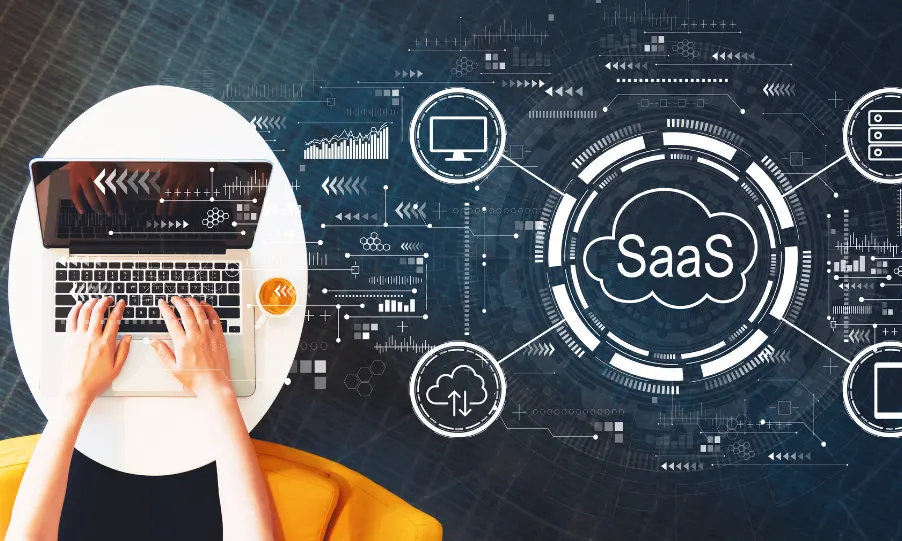
Building a SaaS product is no longer limited to large technology companies. Startups, SMEs, and enterprises across India are launching cloud-based products to solve specific business problems, create recurring revenue, and reach customers globally.
However, turning a SaaS idea into a reliable product requires more than writing code.
You need product strategy, UX design, scalable architecture, cloud infrastructure, security, integrations, testing, analytics, and continuous product improvement.
Choosing the right SaaS application development company in India can help you move from an initial idea to a market-ready SaaS platform while reducing technical risk and accelerating time to market.
This guide explains how SaaS product development works, what technologies are involved, how much it can cost, and what to look for in a SaaS development partner.
What Does a SaaS Development Company Do?
A SaaS development company designs, develops, deploys, and maintains cloud-based software products that customers access through the internet, usually through a subscription or usage-based model.
A professional SaaS development partner can help with:
- SaaS product strategy
- Market and feature validation
- UI/UX design
- MVP development
- Multi-tenant architecture
- Web application development
- Mobile applications
- API development
- Cloud infrastructure
- Third-party integrations
- Subscription and billing systems
- Security
- Analytics
- Testing
- Deployment
- Product maintenance
What Is SaaS Application Development?
SaaS stands for Software as a Service.
Instead of installing software locally, customers access a SaaS application through a web browser or mobile application. The software is hosted and maintained by the provider.
Examples of SaaS products include platforms for:
- CRM
- Accounting
- Project management
- HR management
- Marketing automation
- Customer support
- Logistics
- Healthcare
- Education
- Manufacturing
- Business intelligence
For businesses, SaaS creates an opportunity to turn software into a recurring-revenue product.
Why Build a SaaS Product in India?
India has become a major destination for software product development because businesses can access experienced engineering talent, product designers, cloud specialists, and technology consultants.
For startups and global businesses, working with an Indian SaaS development company can provide:
- Access to experienced developers
- Competitive development costs
- Full-stack engineering capabilities
- Strong cloud expertise
- Flexible engagement models
- Access to AI and automation specialists
- Global product development experience
India also has a large startup and technology ecosystem, making it easier to build teams around emerging technologies.
Custom SaaS Solutions vs Ready-Made Software
Before starting SaaS product development, businesses need to determine whether they should build their own product or use an existing platform.
| Factor | Custom SaaS Product | Ready-Made SaaS |
|---|---|---|
| Business workflows | Fully customizable | Standardized |
| Product ownership | Full control | Vendor controlled |
| Scalability | Designed around requirements | Depends on vendor |
| Integrations | Highly flexible | Limited by APIs |
| Branding | Complete | Usually limited |
| Competitive advantage | High | Low |
| Initial investment | Higher | Lower |
| Long-term flexibility | Excellent | Moderate |
If your objective is to sell software as a product, build proprietary intellectual property, or solve a problem existing platforms cannot address, custom SaaS development is often the stronger approach.
When Should You Build a SaaS Product?
A SaaS product can be a strong option when you identify a repeatable problem experienced by a clearly defined customer segment.
Consider SaaS development if:
- Customers repeatedly face the same problem.
- Existing solutions are too expensive or complicated.
- You have a differentiated product concept.
- The solution can serve multiple customers.
- You want recurring revenue.
- The product can evolve through continuous releases.
- The market has room for a specialized solution.
For founders, the important question isn’t simply “Can we build it?”
It is:
“Will customers pay for it and continue using it?”
SaaS Product Development Process
A successful SaaS product requires a structured development process.
1. Product Discovery
The first stage is understanding the business opportunity.
A SaaS development team should analyze:
- Target customers
- Customer pain points
- Existing competitors
- Product differentiation
- Revenue model
- Core workflows
- Technical feasibility
This stage prevents businesses from investing heavily in features that customers don’t actually need.
2. Define the MVP
The Minimum Viable Product should contain the smallest set of features required to solve the primary customer problem.
For example, an early CRM SaaS platform might include:
- User registration
- Customer management
- Lead management
- Task management
- Basic dashboard
- Notifications
Advanced analytics, AI recommendations, automation, and complex integrations can be introduced later.
This approach reduces initial investment and allows the product team to learn from real users.
If you’re a founder evaluating MVP development, see our guide: From Idea to App Store: A Vadodara Founder’s Guide to MVP Development.
3. UI/UX Design
SaaS products often involve complex workflows.
A good interface should make those workflows simple.
The design process may include:
- User research
- User journeys
- Information architecture
- Wireframes
- Prototypes
- Visual design
- Design systems
- Usability testing
For larger products, creating a reusable design system helps maintain consistency across hundreds of screens.
Businesses deciding whether to hire an individual designer or a team can also explore our comparison: Hiring a UI/UX Designer in Vadodara: Freelancer vs Agency.
4. SaaS Architecture Planning
Architecture is one of the most important technical decisions in SaaS development.
The architecture needs to support:
- Multiple customers
- User authentication
- Data isolation
- Scalability
- High availability
- Security
- Integrations
- Monitoring
- Future feature development
A poorly designed architecture can create technical debt that becomes expensive to fix later.
5. Multi-Tenant SaaS Development
One of the defining characteristics of many SaaS applications is multi-tenancy.
A multi-tenant application allows multiple customers, or tenants, to use the same software platform while keeping their data and configurations logically isolated.
For example:
Company A
- Users
- Projects
- Customers
- Reports
Company B
- Users
- Projects
- Customers
- Reports
Both companies use the same SaaS platform, but each organization sees only its own data.
A strong multi-tenant architecture can improve:
- Infrastructure efficiency
- Scalability
- Maintenance
- Product management
- Feature deployment
6. Backend Development
The backend handles the business logic and data processing behind the SaaS application.
Common technologies include:
- Laravel
- Node.js
- Python
- Java
- .NET
Backend development may cover:
- Authentication
- Authorization
- Business rules
- Database operations
- APIs
- Background jobs
- Notifications
- Payment processing
- Reporting
7. Frontend Development
The frontend is the interface customers interact with.
Popular technologies include:
- React.js
- Angular
- Vue.js
- Next.js
A SaaS frontend should be:
- Fast
- Responsive
- Accessible
- Intuitive
- Scalable
- Consistent
Performance becomes especially important as the product gains users and features.
8. Database Architecture
SaaS products can generate large amounts of structured and unstructured data.
Depending on the product requirements, developers may use:
- PostgreSQL
- MySQL
- MongoDB
- Redis
Database architecture should account for:
- Data relationships
- Tenant isolation
- Performance
- Backup
- Recovery
- Scalability
- Analytics
9. API Development and Integrations
Modern SaaS products rarely operate independently.
Customers may expect integrations with:
- CRM systems
- Accounting platforms
- ERP software
- Payment gateways
- Email services
- SMS providers
- Marketing platforms
- Cloud storage
- Business intelligence tools
API integration services allow your SaaS product to become part of the customer’s existing technology ecosystem.
10. Subscription and Billing
If you’re building a commercial SaaS product, billing is a core component.
Your platform may require:
- Free trials
- Monthly subscriptions
- Annual plans
- Usage-based billing
- Coupons
- Upgrade/downgrade functionality
- Invoices
- Payment processing
- Failed payment handling
A well-designed billing architecture should support pricing changes as the product evolves.
11. Cloud Deployment
SaaS applications need reliable infrastructure.
Common cloud platforms include:
- AWS
- Microsoft Azure
- Google Cloud
Cloud infrastructure can include:
- Application servers
- Databases
- Object storage
- CDN
- Load balancing
- Monitoring
- Logging
- Automated backups
Cloud architecture should be designed according to actual product requirements rather than simply selecting the most expensive infrastructure.
12. Security and Compliance
Security needs to be considered throughout the SaaS software lifecycle.
Important areas include:
- Authentication
- Authorization
- Encryption
- API security
- Data isolation
- Secure coding
- Access control
- Audit logs
- Backup and recovery
- Vulnerability testing
Depending on the industry and target market, SaaS products may also need to consider regulatory requirements such as GDPR, HIPAA, SOC 2, or industry-specific standards.
13. Testing and Quality Assurance
Before launch, the SaaS product should undergo comprehensive testing.
Testing can include:
- Functional testing
- API testing
- Integration testing
- Security testing
- Performance testing
- Cross-browser testing
- Mobile responsiveness
- User acceptance testing
For SaaS products, load testing is particularly important because the application needs to remain responsive as customer numbers increase.
14. Deployment and Continuous Delivery
SaaS products are continuously evolving.
A modern development workflow may use:
- Git
- CI/CD pipelines
- Automated testing
- Docker
- Cloud deployment
- Monitoring
- Error tracking
This enables development teams to release improvements more frequently while reducing deployment risks.
SaaS Technology Stack
The right technology stack depends on the product.
A typical SaaS technology architecture may look like this:
| Layer | Technologies |
| Frontend | React, Angular, Vue, Next.js |
| Backend | Laravel, Node.js, Python, Java, .NET |
| Database | PostgreSQL, MySQL, MongoDB |
| Cache | Redis |
| Cloud | AWS, Azure, Google Cloud |
| Containers | Docker |
| APIs | REST, GraphQL |
| Authentication | OAuth, JWT |
| Payments | Stripe, Razorpay, PayPal |
| Analytics | GA4, Mixpanel, custom analytics |
Technology selection should be based on scalability, development speed, ecosystem maturity, security, hiring availability, and long-term maintenance.
How Much Does SaaS Development Cost in India?
There is no universal SaaS development price.
The investment depends on:
- Number of features
- Product complexity
- UI/UX requirements
- Technology stack
- Integrations
- User roles
- Multi-tenancy architecture
- Security requirements
- Cloud infrastructure
- Mobile application requirements
- AI functionality
- Testing requirements
A rough planning framework could look like:
| SaaS Product Stage | Approximate Timeline | Relative Investment |
| Prototype | 3–6 weeks | Low |
| MVP | 2–5 months | Medium |
| Production SaaS | 5–10 months | High |
| Enterprise SaaS | 9–18+ months | Very High |
These are planning ranges rather than fixed quotations. The actual investment should be determined after product discovery and technical scoping.
For businesses comparing development budgets, our guide on Software Development Cost in Vadodara – What Actually Drives It? explains the factors that influence custom software pricing.
SaaS Development Costs Don’t End at Launch
One common mistake is treating development as a one-time expense.
A SaaS product requires continuous investment in:
- Cloud infrastructure
- Security
- Monitoring
- Bug fixes
- Customer support
- Product updates
- New features
- Third-party services
- Database management
- Performance optimization
This is why SaaS companies should plan for the complete product lifecycle rather than just version one.
How to Reduce SaaS Development Costs
Building efficiently doesn’t mean cutting corners.
Start With a Focused MVP
Build the minimum product required to validate demand.
Prioritize Features
Separate features into:
Must Have → Should Have → Could Have → Later
Reuse Proven Components
Use established frameworks and cloud services instead of reinventing infrastructure unnecessarily.
Plan Architecture Early
A scalable foundation can reduce future redevelopment.
Use Analytics From Day One
Track how customers use the product and prioritize improvements based on actual behavior.
Avoid Premature Complexity
Don’t build enterprise-level infrastructure before you have enterprise-level requirements.
SaaS Product Metrics You Should Track
Once your product launches, development decisions should be guided by measurable outcomes.
Important SaaS metrics include:
- Monthly Recurring Revenue (MRR)
- Annual Recurring Revenue (ARR)
- Customer Acquisition Cost (CAC)
- Customer Lifetime Value (LTV)
- Churn rate
- Activation rate
- Retention rate
- Daily Active Users
- Monthly Active Users
- Trial-to-paid conversion
- Feature adoption
These metrics help determine whether the product is achieving product-market fit.
Common SaaS Development Mistakes
Building Too Many Features
More features don’t automatically create more value.
Focus on the customer’s primary problem.
Ignoring UX
A technically excellent SaaS product can still fail if users find it difficult to navigate.
Poor Multi-Tenant Architecture
Weak tenant isolation can create serious security and scalability problems.
Underestimating Integrations
Third-party integrations can become complex. Plan them during architecture and product discovery.
Ignoring Scalability
A product that works for 100 users may not automatically work for 100,000.
Treating Security as an Afterthought
Security should be built into the architecture rather than added immediately before launch.
How to Choose a SaaS Application Development Company in India
Before selecting a development partner, evaluate:
SaaS Experience
Ask whether the company has developed SaaS products rather than only websites or basic applications.
Technical Capabilities
Look for expertise in:
- Cloud
- APIs
- Multi-tenancy
- Databases
- Security
- DevOps
- Mobile
- AI
Product Thinking
A good partner should challenge assumptions and help prioritize features instead of simply implementing every request.
Portfolio
Review projects with similar complexity and business requirements.
Development Process
Understand how the team manages:
- Discovery
- Design
- Development
- Testing
- Deployment
- Maintenance
Post-Launch Support
SaaS is a long-term product. Your development partner should be capable of supporting future releases.
Why Choose Pavans Group for SaaS Product Development?
Pavans Group helps startups, SMEs, and enterprises turn software ideas into scalable digital products.
Our capabilities cover the complete SaaS product lifecycle:
- SaaS Product Development
- Custom Software Development
- Web Application Development
- Mobile App Development
- UI/UX Design
- Cloud Application Development
- API Development
- Third-Party Integrations
- AI Development
- IoT Development
- Product Engineering
- Software Modernization
With 15+ years of experience and 100+ digital products delivered, Pavans Group combines product strategy, UI/UX, software engineering, cloud technologies, and emerging technologies to build business-ready digital products.
For organizations comparing technology partners, our Ultimate Guide to Choosing an IT Development Partner in Vadodara & India can help you evaluate development companies more effectively.
SaaS Development for Different Business Models
B2B SaaS
B2B SaaS products often focus on:
- Workflow automation
- Enterprise reporting
- CRM
- ERP
- HR
- Finance
- Logistics
They typically require sophisticated user roles, permissions, integrations, and administration.
B2C SaaS
B2C products usually prioritize:
- Simple onboarding
- Mobile experience
- Personalization
- Subscription management
- Engagement
- Retention
Vertical SaaS
Vertical SaaS focuses on a specific industry.
Examples include:
- Healthcare SaaS
- Manufacturing SaaS
- Logistics SaaS
- Education SaaS
- Real estate SaaS
- Financial SaaS
Vertical SaaS can create strong differentiation by solving industry-specific workflows better than generic platforms.
Can AI Be Integrated Into SaaS Products?
Absolutely.
AI can become a valuable layer within SaaS applications.
Potential use cases include:
- AI chat assistants
- Predictive analytics
- Automated reports
- Document processing
- Recommendation engines
- Intelligent search
- Workflow automation
- Customer support
- Forecasting
- Data classification
However, AI should solve a meaningful customer problem rather than being added simply because it is trending.
Businesses exploring AI-enabled products can also read our AI in Mobile Apps: The Complete Guide for Businesses & Beginners and Best AI Tools for Small Businesses in 2026 guides.
SaaS Modernization: What If You Already Have a Product?
Not every business needs to build a SaaS product from scratch.
If you already have legacy software, you may be able to modernize it.
Modernization can involve:
- Moving to the cloud
- Rebuilding the frontend
- Creating APIs
- Introducing microservices
- Improving security
- Migrating databases
- Adding mobile applications
- Introducing AI
- Improving scalability
This approach can preserve valuable business logic while creating a more modern customer experience.
From SaaS Idea to Scalable Product
A successful SaaS product typically follows this journey:
Idea → Validation → Product Strategy → UX Design → MVP → Testing → Launch → Feedback → Iteration → Scale
The important part is not simply reaching launch.
The real goal is building a product customers continue to use and pay for.
Final Takeaway
Choosing the right SaaS application development company in India can have a significant impact on the success of your product.
A strong development partner should bring more than programming expertise. You need a team that understands product strategy, user experience, cloud architecture, security, integrations, scalability, and the realities of building a recurring-revenue software business.
Whether you’re validating your first SaaS idea, developing an MVP, modernizing an existing application, or scaling an established platform, the right technical foundation can make your next stage of growth significantly easier.
If you have a SaaS idea, don’t wait until every feature is defined.
Start with the business problem, validate the opportunity, define the MVP, and build a product that can evolve with your customers.
Frequently Asked Questions
What is a SaaS application development company?
A SaaS application development company specializes in designing, developing, deploying, and maintaining cloud-based software products that customers access through the internet.
How much does SaaS development cost in India?
SaaS development costs vary significantly based on product complexity, features, integrations, architecture, security, and scalability. A focused MVP costs substantially less than an enterprise SaaS platform.
How long does it take to build a SaaS product?
A simple SaaS MVP may take a few months, while a production-ready or enterprise SaaS platform can require six months to more than a year.
What technologies are used for SaaS development?
Common technologies include React, Angular, Vue, Laravel, Node.js, Python, Java, PostgreSQL, MySQL, MongoDB, Redis, Docker, AWS, Azure, and Google Cloud.
What is multi-tenant SaaS architecture?
Multi-tenancy allows multiple customers to use the same SaaS application while keeping their users, data, configurations, and permissions logically isolated.
Should startups build an MVP before a complete SaaS product?
Yes. An MVP helps startups validate demand, gather customer feedback, reduce initial investment, and identify which features should be prioritized before large-scale development.
Can a SaaS application integrate with existing business software?
Yes. SaaS products can integrate with ERP, CRM, accounting, payment, communication, analytics, logistics, and other business platforms through APIs and integration services.
Can AI be integrated into a SaaS product?
Yes. AI can support conversational assistants, predictive analytics, intelligent search, automation, recommendations, document processing, and other use cases.
Is SaaS development suitable for enterprise businesses?
Yes. Enterprise SaaS solutions can support advanced security, role-based access, multi-tenancy, integrations, analytics, workflow automation, and large-scale cloud infrastructure.
How do I choose the best SaaS development company in India?
Evaluate SaaS experience, technical capabilities, portfolio, product development process, cloud expertise, security practices, communication, scalability experience, and post-launch support.
Conclusion
SaaS product development is a long-term business investment. The right architecture, technology stack, UX strategy, and development partner can determine how efficiently your product moves from an idea to a scalable commercial platform.
If you’re ready to build a SaaS product, Pavans Group can help you evaluate the idea, define the MVP, design the user experience, develop the application, deploy it to the cloud, and continue improving it after launch.
Have a SaaS idea? Let’s turn it into a product.
Get a consultation with the Pavans Group team to discuss your SaaS idea, technical requirements, MVP scope, and development roadmap.
Author Bio
Pavans Group Team
Pavans Group is a top-rated software, web, mobile app, AI and IoT development company based in Vadodara, Gujarat. With 100+ apps delivered for clients including Amul, Indian Oil, and global startups, we help businesses build reliable, scalable digital products. Rated 4.9/5 on Clutch and 5.0/5 on GoodFirms.