





Choosing a software development company in India should involve much more than comparing portfolios, hourly rates and sales presentations. The right development partner needs to understand your business problem, demonstrate relevant technical capability, provide a transparent delivery process, protect your data and intellectual property, communicate effectively and support the product after launch.
A practical selection process is:
Define requirements → shortlist relevant companies → verify evidence → meet the delivery team → evaluate technical approach → compare equivalent proposals → review security and contracts → check references → start with a controlled first engagement.
The most important principle is simple: evaluate what the company can prove and how it works, not what it claims on its website.
What should you look for in a software development company in India?
Before hiring a software development company, evaluate these areas:
| Evaluation area | What you should verify |
|---|---|
| Business understanding | Do they understand the problem before recommending technology? |
| Relevant experience | Have they built products with comparable complexity? |
| Technical expertise | Can they explain architecture and technical trade-offs? |
| Actual delivery team | Who will design, develop, test and manage your project? |
| Development process | How are requirements, sprints, releases and changes managed? |
| QA | How will functionality and regressions be tested? |
| Security | How is secure development incorporated into the SDLC? |
| Communication | Who communicates, how often and through which tools? |
| Pricing | Is scope, effort and what is excluded clearly documented? |
| IP and ownership | Who owns source code, designs, accounts and documentation? |
| Post-launch support | Who maintains the software after deployment? |
| Business legitimacy | Can you verify the legal entity and billing details? |
A company does not have to be strongest in every category. It should, however, be strong in the categories that carry the greatest risk for your particular project.
1. Define what you need before searching for a development company
Vendor selection should start with your project-not Google.
Before contacting agencies, write a short project brief explaining:
- the business problem,
- target users,
- desired outcome,
- essential workflows,
- platforms required,
- important integrations,
- expected launch window,
- security or compliance requirements,
- approximate budget,
- what already exists,
- what success will look like.
You don’t necessarily need to decide the programming language, database or cloud architecture.
In fact, prescribing technology too early can prevent a good engineering team from suggesting a better solution.
Define outcomes before features
Instead of saying:
“We need a CRM with 25 modules.”
Define the underlying problem:
“Our sales team currently manages enquiries across spreadsheets, WhatsApp and email. We need one system that tracks each lead from enquiry to closure and gives management a reliable pipeline view.”
That gives potential partners enough context to challenge unnecessary functionality and recommend a more appropriate scope.
2. Shortlist companies that match your type of project
Not every capable software company is the right company for every product.
A company specializing in straightforward websites may not be suitable for a complex multi-tenant SaaS platform. Likewise, an enterprise consultancy designed for large transformation programmes may be unnecessarily expensive or cumbersome for an early-stage MVP.
Look for experience that matches at least one or more of these dimensions:
Product type
- SaaS
- ERP
- CRM
- marketplace
- mobile app
- web application
- enterprise platform
- AI application
- IoT solution
- internal business application
Technical complexity
Consider integrations, data volume, real-time functionality, user roles, offline requirements, security and scalability.
Industry complexity
Domain experience becomes particularly useful when workflows or regulatory requirements are difficult to learn quickly.
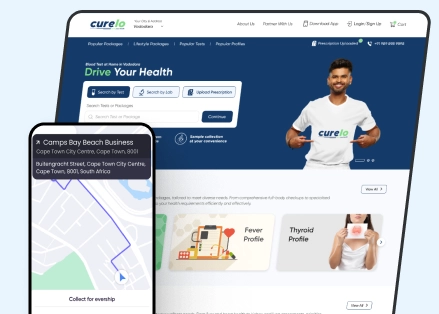
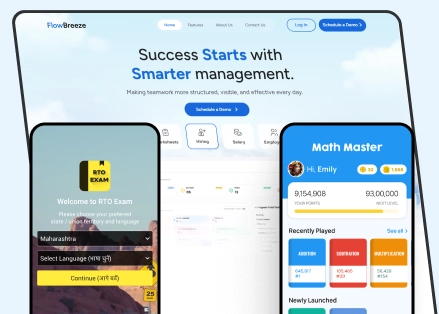
Pavans Group’s software development portfolio is an example of the type of project evidence buyers should review when assessing a development company.
3. Evaluate proof, not portfolio size
Almost every software company has a portfolio.
The better question is:
What does the portfolio actually prove?
Separate evidence into three levels.
Level 1: marketing proof
This includes:
- client logos,
- screenshots,
- testimonials,
- awards,
- review-platform profiles.
Useful, but insufficient alone.
Level 2: operational proof
Look for:
- live products,
- app-store listings,
- detailed case studies,
- client references,
- project scope explanations,
- clear descriptions of what the company actually delivered.
Level 3: technical proof
Ask whether the team can explain:
- architecture decisions,
- scalability considerations,
- difficult integrations,
- testing strategy,
- deployment process,
- technical constraints,
- lessons from previous projects.
You do not need a company to expose another client’s confidential repository to prove that its engineers are capable.
In fact, a vendor casually sharing another customer’s private source code can itself be a confidentiality concern.
A more responsible approach is to request an anonymized architecture example, a technical walkthrough, public code where available, engineering documentation they are permitted to share, or a small paid technical exercise.
That tests capability without asking the company to violate another client’s confidentiality.
4. Meet the people who will actually build your software
Do not evaluate only the salesperson.
Ask who will actually be assigned to:
- product discovery,
- architecture,
- UI/UX,
- frontend development,
- backend development,
- mobile development,
- QA,
- DevOps,
- project management.
You don’t necessarily need to interview every developer, but you should normally have access to the person responsible for important technical and delivery decisions.
Ask the technical lead something like:
“What is the biggest technical risk you see in our requirements?”
A useful answer should reveal how they think.
If the answer is simply “there are no problems—we can build everything,” you have learned something important.
5. Test whether they understand the business problem
One of the strongest signs of a capable development partner is the quality of the questions they ask.
Good discovery questions might include:
- Who will use the system?
- What currently happens without this software?
- Which workflow creates the greatest operational problem?
- Which features are essential for version one?
- Which integrations are business-critical?
- What happens if an external API fails?
- What data will the application store?
- How many users do you expect initially and later?
- Which actions require different permissions?
- What outcome determines whether the project succeeds?
A team that begins recommending React, Flutter, AWS, AI or another technology before understanding the problem may be optimizing around its preferred stack rather than your requirements.
Pavans Group describes its software approach as technology-agnostic, with technology choices based on project requirements, scalability, performance, security and long-term maintenance.
That is the type of reasoning you should ask any shortlisted company to demonstrate.
6. Evaluate technical expertise without being a CTO
You don’t need to write code to assess whether a company thinks carefully about engineering.
Ask them to explain:
Why this architecture?
They should describe why their proposed architecture fits your scale and use case.
Why this technology stack?
Listen for trade-offs rather than buzzwords.
For example:
- development speed,
- available engineering talent,
- ecosystem maturity,
- performance,
- maintainability,
- integration requirements,
- infrastructure cost,
- scalability.
What could become difficult later?
Experienced teams normally identify constraints.
How will the software be maintained?
A technology choice should work not just for the launch but for the people who will maintain the system afterward.
How will architecture decisions be documented?
Important decisions should not live only in one developer’s head.
7. Examine the development process
Ask each shortlisted company to explain what happens between contract signing and production launch.
A mature workflow might include:
Discovery → requirements → UX/design → architecture → development → QA → staging → acceptance → deployment → monitoring → support
The exact methodology matters less than whether responsibilities and checkpoints are clear.
For iterative software products, ask about:
- backlog management,
- sprint planning,
- demos,
- acceptance criteria,
- change requests,
- blockers,
- escalation,
- release approvals.
Avoid choosing a company simply because it says it uses “Agile.”
Ask how the process actually works.
8. Evaluate QA before development begins
Quality assurance should not appear for the first time immediately before launch.
Ask:
- Who writes acceptance criteria?
- Who performs QA?
- Is QA independent from the developer who wrote the feature?
- Which types of testing are appropriate?
- Is there a staging environment?
- How are defects tracked?
- Are regression tests performed before releases?
- How are production issues prioritized?
- Which browsers/devices/environments will be tested?
For more complex systems, testing might include:
- unit testing,
- integration testing,
- end-to-end testing,
- regression testing,
- performance testing,
- security testing,
- user acceptance testing.
Not every project needs every test type. The company should be able to explain what your product requires and why.
9. Assess security as part of vendor selection
Security should be treated as part of software engineering, not as a plugin installed before launch.
NIST’s Secure Software Development Framework (SSDF) provides secure-development practices that can also support communication between software purchasers and suppliers.
For web applications, the OWASP Application Security Verification Standard can also provide a basis for defining security verification requirements during procurement.
Ask potential partners about:
- authentication,
- access controls,
- secrets management,
- encryption,
- dependency management,
- code review,
- backups,
- logging,
- vulnerability management,
- infrastructure access,
- incident response.
The depth of security required should match your product’s actual risk.
10. Check data-protection requirements
If your application processes personal data, privacy requirements should be considered during vendor selection—not discovered after development.
India’s Digital Personal Data Protection Act, 2023 establishes the legal framework for processing digital personal data, and the government published the Digital Personal Data Protection Rules, 2025 with phased commencement provisions.
The exact obligations applicable to your project depend on the business, data and implementation timeline, so obtain appropriate legal advice where necessary.
From a vendor-evaluation perspective, ask:
- What personal data will the software process?
- Where will it be stored?
- Who can access production data?
- How are permissions controlled?
- How are backups secured?
- How are deletion or retention requirements handled?
- Which third parties receive data?
- What happens if a security incident occurs?
For regulated industries or international products, also identify all other applicable privacy, security and sector-specific requirements before development begins.
11. Verify the company itself
For an Indian development company, don’t restrict due diligence to its website.
Confirm that the company or LLP you’re contracting with actually exists.
The Ministry of Corporate Affairs provides company/LLP master-data services that can be used to inspect registered entities.
You can also verify a GSTIN through the official GST portal. Its taxpayer-search service can display information including legal name, trade name, registration status and principal place of business.
Check consistency between
- proposal,
- contract,
- invoice,
- legal entity name,
- GST details,
- bank beneficiary,
- website,
- office/contact information.
A polished proposal does not substitute for basic vendor due diligence.
12. Compare pricing models – not only prices
Three common engagement models are:
| Model | Usually suitable for | Main advantage | Main limitation |
|---|---|---|---|
| Fixed price | Clearly defined scope | Budget predictability | Changes require scope control |
| Time and materials | Evolving products | Flexibility | Final cost is less fixed |
| Dedicated team | Long-term roadmap | Consistent capacity | Requires ongoing product management |
There is no universally superior model.
Fixed-price projects
A fixed-price approach works best when scope, integrations, acceptance criteria and deliverables can be defined reasonably well.
Time and materials
This works better when requirements are expected to evolve and priorities will change during development.
Dedicated development team
This can make sense when development will continue for months or years and you need ongoing engineering capacity.
For a deeper comparison, see Pavans Group’s guide to hiring a dedicated development team in India.
If budget is a major part of your decision, use the separate guide to custom software development cost in India rather than choosing a vendor on hourly rate alone.
13. Normalize proposals before comparing prices
Suppose three companies quote:
- Company A: ₹8 lakh
- Company B: ₹13 lakh
- Company C: ₹18 lakh
That does not automatically mean Company A is cheaper.
First determine whether all three proposals contain the same work.
Compare:
| Proposal component | Vendor A | Vendor B | Vendor C |
|---|---|---|---|
| Discovery | |||
| UI/UX design | |||
| Frontend | |||
| Backend | |||
| API integrations | |||
| Admin panel | |||
| QA | |||
| DevOps/deployment | |||
| Security work | |||
| Documentation | |||
| Data migration | |||
| Training | |||
| Post-launch warranty | |||
| Maintenance | |||
| Third-party costs |
Only compare final pricing after normalizing scope.
One vendor may have excluded UX, deployment and maintenance while another included all three.
The lower quote may still be the right choice—but now you know what you are comparing.
14. Clarify intellectual property and source-code ownership
Do not leave ownership assumptions for the end of the project.
Your agreement should clearly address, with appropriate legal review:
- source-code rights,
- UI/UX files,
- project documentation,
- databases,
- custom assets,
- reusable/vendor-owned components,
- third-party libraries,
- credentials,
- domains,
- cloud resources,
- repositories,
- handover requirements.
Also clarify when ownership transfers and whether any pre-existing vendor components remain separately licensed.
This is more precise than simply asking, “Will I own the code?”
15. Avoid infrastructure lock-in
An overlooked question is:
Whose account holds the software?
For critical production systems, clarify ownership and administrator access for:
- Git repositories,
- cloud platforms,
- domain registrar,
- DNS,
- databases,
- analytics,
- app-store accounts,
- payment gateway accounts,
- email/SMS providers,
- monitoring systems.
The objective is not distrust.
It is business continuity.
If the relationship ends, your organization should be able to operate, maintain and transfer the product without rebuilding access from scratch.
16. Evaluate communication before signing
Communication problems usually become more expensive as the project becomes more complex.
Agree in advance on:
- primary contact,
- project manager,
- technical contact,
- meeting schedule,
- sprint demonstrations,
- status reports,
- issue tracker,
- response expectations,
- escalation path,
- working-hours overlap.
If you are based outside India, don’t simply ask whether the company “works in your timezone.”
Ask:
“Which hours will our teams overlap, and which meetings require both teams?”
That gives you an operational answer.
17. Ask how scope changes are handled
Software requirements change.
A mature partner does not pretend otherwise.
Ask what happens when:
- a new feature is requested,
- an integration changes,
- assumptions prove incorrect,
- the client delays feedback,
- a third-party dependency fails,
- a feature takes materially longer than expected.
A change-control process should explain:
Request → impact analysis → cost/timeline change → approval → implementation
Without this process, legitimate changes can quickly turn into commercial disputes.
18. Understand what happens after launch
Software development does not necessarily finish at deployment.
Clarify:
- bug/warranty period,
- support availability,
- severity definitions,
- response times,
- infrastructure monitoring,
- software updates,
- dependency updates,
- backups,
- security patches,
- feature development,
- SLA options,
- knowledge transfer.
Ask one particularly useful question:
“If our internal team or another company takes over this application next year, what will you hand over?”
A good answer should include more than a ZIP file containing source code.
19. Speak with references intelligently
Client references can help, but generic questions often generate generic answers.
Instead of asking:
“Were you happy with them?”
Ask:
- What was originally promised?
- What changed during development?
- What was the biggest problem?
- How did the team respond?
- Was the final cost close to expectations?
- Did the original team remain involved?
- How was communication when something went wrong?
- Would you hire them again?
- What would you do differently?
Every meaningful project encounters constraints.
How the company handles problems can be more revealing than whether problems occurred.
20. Consider a discovery phase or small first engagement
You do not always need to commit the entire project immediately.
For an unfamiliar vendor or a high-risk project, a paid discovery engagement can validate how the teams work together before the largest financial commitment.
Discovery might produce:
- refined requirements,
- user journeys,
- feature priorities,
- wireframes,
- architecture,
- risk assessment,
- delivery roadmap,
- estimate.
A technical pilot can also be appropriate when one uncertain component—such as a difficult API integration, AI workflow or hardware connection—could determine feasibility.
This converts some vendor-selection uncertainty into observable evidence.
A 100-point software development company evaluation scorecard
To reduce subjective decision-making, score every finalist using the same framework.
| Criterion | Weight |
|---|---|
| Relevant product/domain experience | 15 |
| Engineering and architecture capability | 15 |
| Business understanding and discovery | 15 |
| Development and delivery process | 12 |
| QA, security and reliability | 12 |
| Team quality and communication | 10 |
| Pricing and commercial transparency | 8 |
| IP, documentation and handover | 8 |
| Post-launch support | 5 |
| Total | 100 |
Score each category from 1–5, then apply the weighting.
The purpose is not mathematical precision. It is to prevent one impressive presentation, low quote or recognizable client logo from dominating the decision.
Add project-specific weighting
A fintech product might increase the security/compliance weighting.
An early-stage MVP might prioritize:
- discovery,
- product thinking,
- development speed,
- flexibility.
A long-term enterprise application may place more weight on:
- maintainability,
- documentation,
- support,
- continuity,
- integration capability.
That makes your selection framework reflect actual risk.
21. Questions to ask a software development company before hiring
You can use these questions in every vendor interview:
- What do you believe is the main business problem we are solving?
- Which comparable products have you built?
- Who will actually work on our project?
- Who will make architecture decisions?
- What would you challenge or change in our current requirements?
- Which technology would you recommend and why?
- What are the biggest risks in this project?
- How do you estimate effort and timeline?
- How do you manage requirement changes?
- What does your QA process include?
- How do you approach application security?
- Where will the source code and infrastructure accounts reside?
- What documentation will we receive?
- What happens after launch?
- What happens if we decide to move development elsewhere?
The quality and specificity of the answers matter more than whether they use the “correct” terminology.
22. Red flags when choosing a software development company
Be cautious when a company:
- provides a confident fixed quote from an extremely vague brief,
- agrees with every request without discussing trade-offs,
- cannot explain who will work on the project,
- relies entirely on portfolio screenshots,
- cannot describe its QA process,
- treats security as an optional final-stage activity,
- avoids discussing ownership or handover,
- cannot clearly explain proposal exclusions,
- refuses reasonable reference checks,
- cannot explain change management,
- depends on one person for all critical project knowledge,
- insists that all infrastructure must remain exclusively under its accounts,
- makes unrealistic guarantees about cost, deadlines, performance or business outcomes.
One red flag does not automatically disqualify a company.
Several unresolved red flags should materially affect your decision.
23. Cheapest vs most expensive: which software company should you choose?
Neither.
Choose the company offering the best risk-adjusted value for your requirements.
Price should be considered alongside:
Scope + capability + team + quality + delivery risk + maintainability + support + ownership
An inexpensive vendor can be an excellent choice for a simple, well-defined project.
A higher-cost team can make sense when the system is revenue-critical, technically complex or expensive to replace.
And an expensive quotation is not evidence of better engineering.
Your objective is to determine what you’re receiving for the investment.
24. Should you choose a specialist or full-service software company?
It depends on what the project requires.
Choose a specialist when
Your challenge requires unusually deep expertise in a narrow area and most of the surrounding product is already covered.
Consider a broader development company when
Your project requires several interconnected capabilities such as:
- product strategy,
- UI/UX,
- web development,
- mobile development,
- backend/API development,
- AI,
- IoT,
- cloud infrastructure,
- QA.
Working with one integrated team can reduce handoffs, but only if it genuinely has the necessary expertise.
For example, businesses with AI-heavy requirements can evaluate Pavans Group’s AI development capabilities, while products involving native or cross-platform applications can review its mobile app development services.
25. A practical step-by-step process for choosing your partner
A strong selection process does not need dozens of agencies.
Step 1: Create the brief
Define the business problem, requirements, constraints and success criteria.
Step 2: Build a focused longlist
Identify companies with relevant capabilities and project experience.
Step 3: Shortlist three to five firms
Remove companies that clearly do not match the project.
Step 4: Run discovery conversations
Observe the questions they ask—not only the answers they give.
Step 5: Meet technical leadership
Discuss architecture, risks, process and trade-offs.
Step 6: Request comparable proposals
Send all finalists the same requirements.
Step 7: Normalize the proposals
Compare inclusions, exclusions, assumptions, staffing and ongoing costs.
Step 8: Verify business credentials and references
Use independent and official sources where appropriate.
Step 9: Review security, IP and contractual terms
Involve legal/security specialists when the project’s risk warrants it.
Step 10: Score each finalist
Apply the same weighted framework.
Step 11: Start with discovery or a controlled milestone where appropriate
Observe the team’s actual working behaviour.
Step 12: Finalize governance before scaling
Confirm reporting, repository access, decision ownership, milestones and escalation.
That is a more reliable selection process than searching for “the best software company in India” and choosing whichever website appears most impressive.
How Pavans Group fits into the evaluation
Pavans Group is a software and digital product development company based in Vadodara, Gujarat, working across web, mobile, AI, IoT and UI/UX development. Its public portfolio includes software products across healthcare, logistics, finance and other use cases.
But the evaluation framework in this guide should apply to Pavans Group just as it applies to any other company you shortlist.
Review the Pavans Group portfolio, discuss your requirements with the technical team, verify relevant project experience, understand the proposed scope and architecture, confirm commercial and ownership terms, and compare the proposal objectively with other suitable providers.
That is a better basis for a development partnership than choosing any company solely because it ranks well, has recognizable clients or offers the lowest rate.
Frequently asked questions
How do I choose the best software development company in India?
Start by defining your requirements and then evaluate companies based on relevant experience, engineering capability, actual delivery team, development process, QA, security, communication, pricing transparency, IP terms and post-launch support. Verify evidence instead of relying only on portfolios or sales claims.
What is the most important factor when choosing a software development company?
There is no single factor for every project. A strong indicator is whether the company can understand your business problem and demonstrate that it has the people, process and technical capability required to solve it reliably.
How many software development companies should I shortlist?
For most projects, three to five serious finalists are sufficient for detailed comparison. Evaluating too many firms can consume substantial time without improving the final decision.
Should I choose the cheapest software development company in India?
Not automatically. Compare identical scopes and consider architecture, QA, security, documentation, support and ownership before comparing final prices. The cheapest appropriate solution can be a good decision; the cheapest incomplete proposal usually is not.
How can I verify a software company in India?
Check its legal business details and ensure they match the proposal and contract. Company/LLP information can be checked through India’s Ministry of Corporate Affairs, while GST registration details can be verified through the official GST taxpayer-search service.
What should I ask a software development company before hiring?
Ask who will work on the project, what similar products they have built, what risks they see, why they recommend their proposed architecture, how QA and security are handled, what is excluded from the quotation, who owns the code and accounts, and what happens after launch.
Is fixed-price or dedicated-team software development better?
Fixed price generally works better for stable, well-defined requirements. Time-and-materials or dedicated teams are often more appropriate when requirements and priorities will continue evolving. The right model depends on the predictability and duration of the work.
How do I protect my source code when outsourcing to India?
Define intellectual-property rights, source-code access, repository ownership, third-party components, credentials, documentation and handover responsibilities clearly in the development agreement. Obtain legal advice appropriate to your jurisdiction and project rather than relying on verbal assumptions.
How can I evaluate a software company’s technical ability if I’m not technical?
Ask engineers to explain architecture decisions, project risks and trade-offs in plain language. You can also use a trusted technical advisor to review proposals, architecture or a small paid pilot before committing to a larger project.
Should I ask a vendor to show another client’s source code?
Generally, no. Instead, request evidence the company is authorized to share: public repositories, anonymized documentation, architecture examples, technical walkthroughs or a paid pilot. A vendor that casually exposes another customer’s confidential code may create its own trust concern.
Conclusion
Choosing the right software development company in India is ultimately a risk-management and business decision-not simply a search for developers at the lowest hourly rate.
Start by defining the business problem clearly. Then assess each shortlisted company against the same evidence-based criteria: relevant experience, product thinking, engineering capability, team quality, development process, QA, security, communication, commercial transparency, ownership and post-launch support.
Most importantly, verify rather than assume.
Don’t assume a client logo proves what the company built. Don’t assume a large team means senior engineers will work on your project. Don’t assume payment automatically resolves every ownership question. And don’t assume the lowest or highest quotation represents the best value.
A strong software development partner should make your project clearer before development begins. The team should be willing to question assumptions, explain trade-offs, identify risks and define how the product will be built, tested, deployed, maintained and eventually handed over.
If you are evaluating an Indian development partner for a web platform, mobile app, SaaS product, AI solution, IoT system or custom business application, you can review Pavans Group’s software development capabilities and discuss your requirements with the team. Use the same evaluation framework in this guide when assessing Pavans Group or any other finalist.
The goal isn’t to find the company with the strongest sales pitch.
It is to find the team you can trust with the product after the sales presentation ends.
Author bio
Pavans Group Team
Pavans Group is a software and web development company headquartered in Vadodara, Gujarat. Established in 2011, the team works across web development, mobile applications, AI, IoT and UI/UX for businesses in India and international markets.