





AI in healthcare (also called healthcare AI, medical AI, AI medicine, clinical AI) integrates machine learning, computer vision, natural language processing, and predictive analytics to boost diagnostics, personalize treatment, automate workflows, and enhance AI patient care. As of early 2026, the FDA has authorized over 1,451 AI/ML-enabled medical devices, with radiology accounting for about 76% (roughly 1,104 devices). Key benefits include 40-45% reductions in clinical documentation time, improved diagnostic accuracy in targeted tasks (often 90%+), and significant ROI through efficiency gains.
Top Recommendations:
- Best for diagnostics: AI medical imaging and AI in radiology tools.
- Best for hospitals: AI healthcare automation, AI patient monitoring, and predictive healthcare systems.
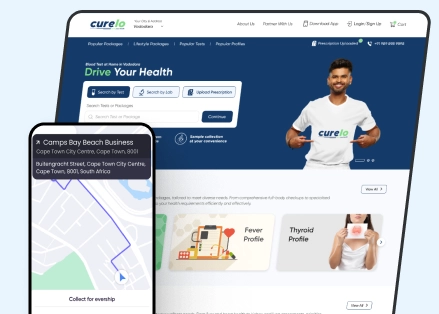
- Pavans Group Expertise: Custom AI healthcare solutions, including the Curelo platform for AI-powered lab insights and clinical notes.
What Is AI in Healthcare?
AI in healthcare is the application of artificial intelligence technologies including machine learning applications in healthcare, deep learning, computer vision for AI medical imaging, natural language processing, and generative AI to medical data and processes. These tools analyze electronic health records (EHRs), medical images, wearable device data, genomic information, and more to support better clinical decisions, automate routine tasks, and deliver personalized patient experiences.
This field encompasses healthcare AI, medical AI, AI medicine, AI diagnostics, AI hospitals, tools that assist AI doctors, healthcare technology, medical technology, digital healthcare, AI healthcare software, and AI-powered healthcare systems. AI in hospitals and clinics helps process vast amounts of data far faster than humans, identifying patterns for AI disease prediction, AI for early disease detection, and AI clinical decision support.
At its core, AI for healthcare acts as an intelligent assistant rather than a replacement for medical professionals. It augments human expertise by handling repetitive or data-intensive tasks, allowing clinicians to focus on complex care and human connection. Pavans Group, a leading software, AI, and IoT development company in Vadodara, Gujarat, specializes in building secure, scalable, HIPAA-compliant AI healthcare solutions that integrate seamlessly with existing systems. With over 100 apps delivered for clients like Amul and Indian Oil, our team brings proven expertise to health-tech projects.
How does artificial intelligence work in healthcare? Modern systems use trained algorithms on large datasets to recognize patterns. For example, a computer vision model learns from thousands of labeled X-rays to detect anomalies. Predictive models analyze historical patient data to forecast risks. Generative AI helps draft clinical notes or explain reports in plain language
How AI Transforms Diagnostics
AI diagnostics and AI in medical diagnosis represent one of the most mature applications. AI medical imaging and AI in radiology lead with the majority of FDA clearances. As of early 2026, radiology comprises approximately 76% of the 1,451 authorized AI/ML devices.
Detailed Mechanisms: Computer vision algorithms scan X-rays, CTs, MRIs, and mammograms for subtle patterns invisible to the human eye or too time-consuming to review manually. For instance, AI tools reduce false positives in breast cancer screening and achieve high accuracy in detecting diabetic retinopathy (~96% in some validations).
AI in radiology assists by prioritizing urgent cases, measuring lesions, and even generating preliminary reports. How AI improves medical diagnosis includes faster turnaround times, reduced radiologist burnout, and higher throughput—often 25-30% improvement while maintaining or enhancing accuracy.
Beyond imaging, AI disease prediction models use lab results, EHRs, and lifestyle data for early warnings on conditions like sepsis, cardiovascular events, or cancer progression. AI for early disease detection can identify risks before symptoms appear, enabling proactive interventions that save lives and costs.
Pavans Group develops custom AI diagnostics modules that integrate with hospital information systems, PACS, and lab equipment, ensuring seamless workflows.
AI in Patient Care and Engagement
AI patient care extends far beyond diagnostics into the entire care journey. AI applications in patient care include personalized treatment planning, remote monitoring, and enhanced communication.
AI patient monitoring leverages IoT wearables and sensors to track vital signs in real-time, predicting deteriorations and reducing hospital readmissions by 20% or more in implemented cases. AI-powered healthcare systems power virtual assistants and chatbots that handle initial triage, appointment scheduling, and post-discharge follow-ups.
Ambient AI scribes listen to consultations and automatically generate structured clinical notes, cutting documentation time by 40-45% and allowing more face-to-face patient interaction. Tools like those in the Curelo platform provide smart report explanations, helping patients understand lab results in plain language.
Role of artificial intelligence in healthcare here is transformative: it humanizes care by reducing administrative burdens on professionals while empowering patients with accessible information.
Key Benefits of AI in Healthcare Industry
The benefits of AI in healthcare industry are backed by data and real deployments:
- Diagnostic Accuracy & Speed: AI often matches or exceeds specialists in narrow tasks, leading to earlier interventions.
- Operational Efficiency: AI healthcare automation streamlines administrative processes, billing, and resource allocation.
- Cost Reduction: Predictive models optimize staffing and prevent costly complications.
- Personalized Medicine: AI for personalized medicine tailors therapies based on genetics and history.
- Improved Access: Telemedicine and remote tools supported by AI bridge gaps in rural or underserved areas.
- Clinician Support: Reduces burnout and supports AI clinical decision support for complex cases.
Market projections show the global AI healthcare sector growing rapidly toward $50-56 billion in 2026, with strong compound annual growth. Real-world statistics include significant sepsis mortality reductions and improved charge capture rates in hospitals.
Challenges and Risks of AI in Healthcare
Despite promise, challenges of AI in healthcare and ethical concerns of AI in healthcare must be addressed:
- Bias and Fairness: Models trained on limited datasets may underperform for certain populations.
- Privacy and Security: Strict HIPAA/GDPR compliance is essential.
- Integration and Adoption: Legacy systems and change management pose hurdles.
- Regulatory and Validation Needs: While FDA has cleared 1,451+ devices, real-world performance monitoring continues.
- Over-Reliance: AI should augment, not replace, clinical judgment.
What are the risks of AI in healthcare? Potential for errors, hallucinations in generative tools, and accountability questions. Pavans Group mitigates these through rigorous testing, transparent development, diverse data considerations, and ongoing support.
How Hospitals Use AI Technology: Implementation Guide
How hospitals use AI technology successfully follows a phased approach:
- Needs Assessment: Identify pain points in diagnostics, documentation, or monitoring.
- Pilot Projects: Start with high-impact, low-risk tools like ambient scribes or AI imaging aids.
- Data Governance & Compliance: Ensure secure, ethical data handling.
- Staff Training & Change Management: Involve clinicians early.
- Scale & Integrate: Expand with partners like Pavans Group for custom AI healthcare software and IoT solutions.
- Measure Outcomes: Track metrics like accuracy, time saved, and patient satisfaction.
Best AI tools for healthcare vary by setting contact experts for tailored recommendations. Download our lead magnet “AI Use Cases for Healthcare Providers” for detailed blueprints.
Future of AI in Healthcare: Trends for 2026 and Beyond
The future of AI in healthcare looks dynamic with agentic AI, digital twins for simulations, multi modal models combining imaging and text, advanced AI drug discovery, and deeper AI and healthcare data analytics. Expect growth in AI for personalized medicine, virtual care, and public health applications.
AI healthcare trends in 2026 include regulatory advancements (FDA-EMA collaborations), wider ambient AI adoption, and focus on explainable AI for trust. Pavans Group remains at the forefront, developing solutions aligned with these evolutions for Indian and global markets.
FAQ’s
1. What is AI in healthcare?
AI in healthcare applies intelligent algorithms to medical data to improve diagnostics, patient care, and operational efficiency.
2. How is AI used in healthcare?
AI is used through medical imaging analysis, predictive analytics, virtual scribes, patient monitoring systems, and clinical decision support tools.
3. Why is AI important in healthcare?
AI helps address clinician shortages, improves diagnostic accuracy, reduces costs, and enables proactive, data-driven healthcare.
4. What are the benefits of AI in healthcare?
Key benefits include enhanced accuracy, improved efficiency, personalized treatment plans, better patient outcomes, and strong return on investment (ROI).
5. What are the risks of AI in healthcare?
Potential risks include algorithmic bias, data privacy concerns, regulatory challenges, and integration issues, which can be managed through proper governance and oversight.
6. How does AI improve patient care?
AI improves patient care through continuous monitoring, personalized treatment recommendations, early disease detection, and reduced administrative burdens on healthcare providers.
7. Can AI replace doctors?
No. AI is designed to assist and augment healthcare professionals, not replace them. Human expertise remains essential for diagnosis, treatment decisions, and patient interaction.
8. Is AI accurate in medical diagnosis?
AI can achieve high accuracy in specific diagnostic tasks, particularly in areas such as radiology and medical imaging, when used alongside clinical oversight.
9. How does AI help hospitals?
AI streamlines hospital operations by improving diagnostics, automating workflows, optimizing resource allocation, and enhancing patient management.
10. What is the future of AI in healthcare?
The future includes agentic AI systems, accelerated drug discovery, predictive healthcare, and fully integrated AI-powered healthcare ecosystems.
11. How does artificial intelligence work in healthcare?
AI analyzes large volumes of healthcare data, identifies patterns, makes predictions, automates routine tasks, and supports clinical decision-making.
12. What are examples of AI in healthcare?
Examples include medical imaging analysis, predictive analytics, robotic-assisted surgery, virtual health assistants, and remote patient monitoring.
13. How do healthcare providers use AI?
Healthcare providers use AI for diagnosis support, clinical documentation, patient monitoring, workflow automation, and treatment planning.
14. What diseases can AI detect?
AI can help detect various conditions, including cancer, cardiovascular disease, sepsis, neurological disorders, and other chronic illnesses, often at earlier stages.
15. What are the best AI tools for healthcare?
The best AI tools depend on the healthcare organization’s needs and may include solutions for diagnostics, patient monitoring, clinical decision support, and operational management.
16. How much does healthcare AI cost?
Healthcare AI costs vary significantly depending on the solution, implementation scope, and infrastructure requirements. Many organizations achieve substantial cost savings and operational efficiencies over time.
17. How is machine learning used in healthcare?
Machine learning is used for risk prediction, disease detection, patient outcome forecasting, medical image analysis, and personalized treatment recommendations.
18. How does AI assist in drug discovery?
AI accelerates drug discovery by identifying promising compounds, analyzing biological data, predicting drug interactions, and optimizing clinical trials.
19. How does AI improve medical imaging?
AI enhances medical imaging by increasing detection accuracy, reducing analysis time, prioritizing critical cases, and supporting radiologists in diagnosis.
20. Can AI predict diseases before symptoms appear?
Yes. Advanced predictive models can analyze patient data and identify risk factors that may indicate the likelihood of developing certain diseases before symptoms become noticeable.
Conclusion
AI in healthcare is actively transforming diagnostics, AI patient care, hospital operations, and the entire AI healthcare industry. From AI diagnostics and AI medical imaging to AI healthcare automation and personalized solutions, the technology delivers tangible benefits while presenting manageable challenges. Organizations that partner with experienced developers achieve compliant, scalable results that improve outcomes and efficiency.
Pavans Group’s work on projects like Curelo exemplifies how AI in healthcare case studies translate into real value for providers and patients alike.
Ready to leverage these advancements? Book a Healthcare AI Consultation with our experts today and download the AI Use Cases for Healthcare Providers lead magnet to explore tailored opportunities for your organization.
Author Bio:
Pavans Group Team Pavans Group is a top-rated software, web, mobile app, AI and IoT development company based in Vadodara, Gujarat. With 100+ apps delivered for clients including Amul, Indian Oil, and global startups, we help businesses build reliable, scalable digital products. Rated 4.9/5 on Clutch · 5.0/5 on GoodFirms.